
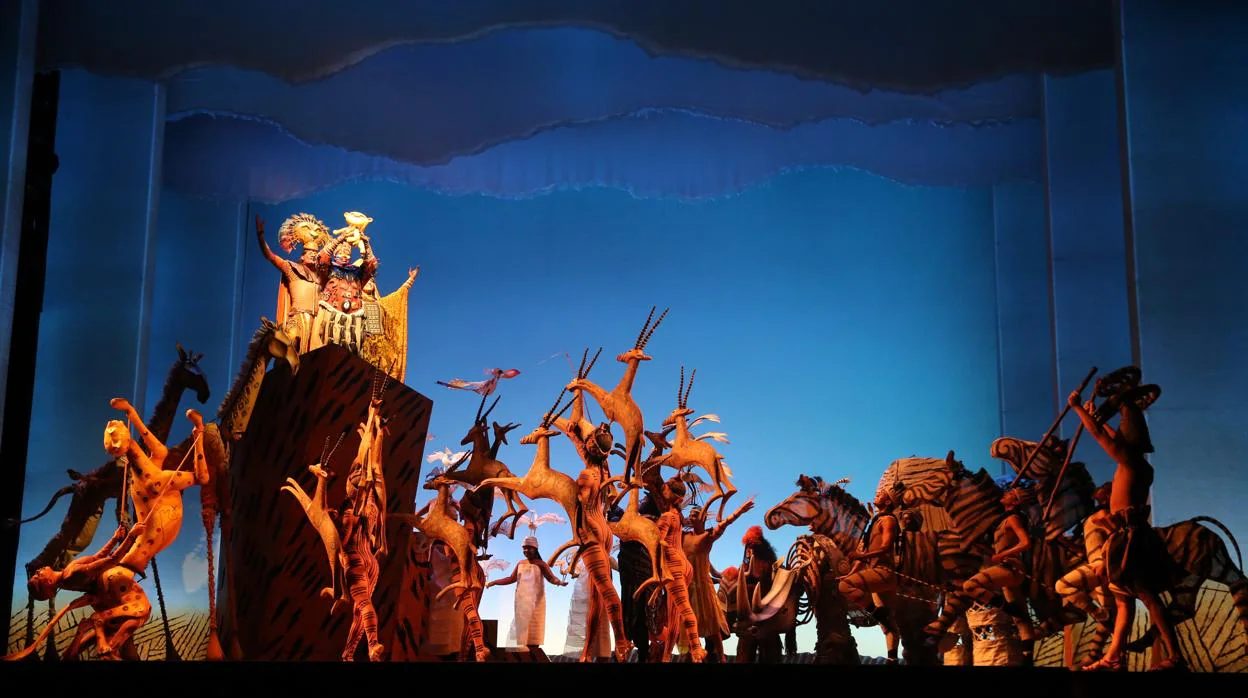
In Madrid, having a ready-to-go production does not guarantee finding where to premiere it. A project may boast a cast, a creative team, and funding, yet remain dependent on the decisive factor: a venue that can offer consecutive dates, adequate capacity, and workable conditions. The challenge isn’t understood by simply counting theatres on a map. For a producer, what matters is how many weeks of programming can be booked and whether those weeks fit the mounting they intend to stage.
The problem coincides with a corporate transformation of Madrid’s private theatres. Stage Entertainment has consolidated ownership of the Lope de Vega and the Coliseum, ATG Entertainment has strengthened its presence after acquiring SOM Produce and beon. Entertainment has taken over Calderón’s programming. Adding to these operators are established groups like Smedia and Pentación, which control the management of other venues key to the theatre exhibition landscape.
The intersection of corporate and municipal information carried out by ActualTV allows establishing a first magnitude: Stage, ATG, and beon bring together more than 8,180 seats across seven Madrid theatres. The figure does not equate to a market share nor does it mean that all those seats are available to external producers. This is precisely where the industrial issue lies: the physical capacity of a city does not tell how much space is actually left for premieres.
The new map of Madrid’s theatres: who owns the venues and who decides the programming
The private theatre market structure in Madrid does not follow a single business model. It coexists with theatre-owning companies, producers who also manage venues, operators specialized in programming, and firms that combine several of these activities.
The result is an ecosystem in which owning a building, running a theatre, and deciding which shows fill its schedule are distinct positions, though all can confer strategic leverage.
| Operator | Theatres linked in Madrid | Situation documented in 2026 |
|---|---|---|
| Stage Entertainment | Lope de Vega and Coliseum | Full ownership of both since April 2026. Preparing a third theatre for 2027. |
| ATG Entertainment | Apolo, Nuevo Teatro Alcalá, Rialto and Amaya | Producer and operator of these four spaces, with different ownership and management models. |
| beon. Entertainment | Calderón | In charge of management and programming since August 2025. |
| Grupo Smedia | Gran Vía, Alcázar, Fígaro, Maravillas, Pequeño Gran Vía y Capitol Gran Vía | Management of six venues with varying capacities and programming models. |
| Pentación Espectáculos | La Latina and Bellas Artes | Management and programming of both stages, with a strong emphasis on straight plays. |
ActualTV methodology: compilation of information from the official websites of Stage, ATG, beon, Smedia, and Pentación, cross-checked with municipal information available as of October 25, 2026. The table identifies relevant private operators, but it does not constitute an exhaustive census of Madrid’s theatres nor does it by itself certify their commercial availability.
Within that map, Stage and ATG stand out particularly for the scale of the musical shows they programme.
Stage acquired in April 2026 full ownership of Lope de Vega and the Coliseum, which had previously been part of a jointly owned structure with PATRIZIA. The operation allowed it to move from a joint ownership setup to full control of two venues that together total roughly 3,000 seats.
ATG, for its part, entered the Spanish market by acquiring SOM Produce in January 2025. It currently lists 4,370 seats distributed among the Apolo, Nuevo Teatro Alcalá, Rialto, and Amaya. Its current season’s programming highlights the weight of its portfolio: Les Misérables at the Apolo, Wicked at the Nuevo Teatro Alcalá, and Dear Evan Hansen at the Rialto.
The Calderón case shows that the map can be redefined without building new buildings. Included among the theatres managed by SOM when the ATG acquisition was announced, the venue passed in August 2025 to beon. Entertainment for its management and programming. It has 1,011 seats, according to Madrid’s official tourism information.
Business moves are not limited to large musical productions. Smedia maintains a portfolio of theatres with diverse programming, while Pentación continues to manage La Latina and Bellas Artes. Their presence reminds us that the battle for dates and venues also affects comedies, straight plays, family shows, and smaller-format productions.
The odyssey of finding dates: when having a production does not guarantee you can premiere it
The difficulty of accessing a theatre is not explained solely by the number of available rooms. Calendars, season durations, and each show’s needs also come into play.
A venue can appear on Madrid’s theatre market, yet not be a viable option for a producer needing six to eight consecutive weeks. Long-running musicals occupy large stages for extended periods; other theatres group several productions within the same week. In both models, the number of seats does not by itself indicate which gaps remain. There is no unified public calendar of free weeks in Madrid’s major private theatres.
This forces producers to commit well in advance. A producer may be negotiating dates for a future season while seeking financing, finalising cast, and planning a tour. If any of those elements fail, the entire project can be jeopardised.
The calendar conditions a large portion of a premiere’s economic architecture. Fixing dates allows signing artistic contracts, negotiating technical suppliers, reserving promotional budget, and organising a potential tour. If the producer has to commit these expenses before securing the show, its financial exposure increases; if they wait to find a venue, they risk losing cast time and equipment availability. Programming is a financing lever, not a mere administrative step.
The absence of dates not only delays premieres: it also complicates the economic and artistic planning of producers. A show needs a sufficient exhibition period to build an audience, refine its commercial operation, and recover part of the investment.
For some productions, a Madrid season also serves as a showcase to curators from other cities. That function depends on having enough exposure time for the show to be seen and known. A premiere with limited performances may restrict those commercial opportunities, even if the show is ready to tour.
Thus, the problem does not end when a producer finds a venue. It also matters how long it can stay there and what opportunities exist after continuing to exploit its work.
The Business Advantage of Controlling a Theatre
Owning a theatre or steering its programming offers a leverage that extends beyond saving on a single negotiation.
A company can organize its calendar with greater predictability, design productions tailored to a venue’s technical features, and align marketing with its exhibition expectations. If a show proves successful, it can also study its continuity within its broader business strategy.
For a producer who relies on negotiating a space with a third party, those decisions require additional agreements and may be conditioned by commitments already made by the theatre.
The difference becomes particularly relevant for productions that require long-running seasons. It is not the same to prepare a musical for months on a stage as it is to adapt a play for several weeks or for isolated performances.
Controlling a venue’s programming enables deciding which projects receive time, continuity, and growth potential. That does not mean operators will necessarily favour their own productions over external ones, nor does it imply a market is closed.
In fact, ATG explicitly offers programming services and access to its theatres to external producers, promoters, and organizers. Managing venues and producing shows are activities compatible with business collaboration.
What remains publicly unclear is what share of the major venues’ dates is reserved for in-house productions, how many are allocated to third parties, and how far in advance these agreements are closed.
Without that information, it would not be rigorous to calculate a concentration index of available dates or claim that certain producers are being excluded. But the market’s structure does allow you to identify an asymmetry: some companies negotiate the theatre from within their own organization, while others must find space in calendars they do not control.
The Problem Also Affects Scripted Theatre
Reducing this transformation to musicals would overlook a significant portion of its consequences.
Scripted theatre does not always require the technical machinery of a large musical, yet it also depends on finding a venue with the right capacity, costs, and exhibition time. A large-stage facility can be economically unviable for a mid-sized production; a smaller venue may not have enough consecutive weeks to give it traction.
The market combines two particularly visible strategies: the prolonged residence of a single title and the multi-programming of several shows. The first allows for leveraging sets and installations designed for a specific production. The second facilitates rotation, though it does not always provide blocks of continuous performances.
Both models respond to different business needs, but they condition exhibition opportunities.
A musical with high investment may require a lengthy residence to make the most of its infrastructure and amortize its costs. A theatre with rotating programming can offer space to more titles, albeit for shorter periods.
Neither model guarantees better artistic or commercial results on its own. However, the coexistence of both determines which kinds of productions find space in the city and how long they can stay before the public.
Madrid needs large shows capable of attracting audiences over whole seasons. It also needs a network of theatres where mid-sized productions, new playwrights, and financially modest proposals have real chances to establish themselves.
The issue is not about pitting big operators against independent producers. It is about examining whether the market provides enough variety in venues, formats, and calendars to sustain both activities.
More Theatres, More Opportunities for Producers?
The next major addition to Madrid’s map will be Stage Gran Teatro Musical, a project the company is building in the former IMAX facilities at the Enrique Tierno Galván Park.
The space will offer more than 1,500 seats and is slated to open in autumn 2027. Stage holds an initial 32-year concession, extendable, and has already announced that it will premiere with Moulin Rouge! The Musical.
The development will increase the city’s capacity to host large musicals and will allow Stage to maintain three productions simultaneously. But it also demonstrates why creating new seats does not automatically translate into dates available for any producer: the new venue’s initial programming will be linked to the operator’s overall strategy.
ActualTV has already analyzed the transformation and expansion of the old IMAX. The industrial question still open is different: whether the growth in infrastructure will also translate into a broader range of opportunities for those producing shows without owning theatres themselves.
There is, moreover, information the sector would benefit from having to better assess the situation: a map of effective availability that reveals exhibition weeks, access conditions, and rotation of Madrid’s main private theatres.
That analysis would help distinguish between a shortage of buildings, a lack of commercially viable dates, technical limitations, and difficulties in reaching economic agreements with operators.
Madrid’s commercial theatre has shown it can attract investments, large productions, and new business groups. The next challenge is less visible but potentially just as important: that the growth of shows does not turn access to a suitable stage into an increasingly difficult barrier to overcome.
Because an theatre industry is not measured only by the productions it manages to premiere. It is also measured by those that have real chances of finding a theatre to stage them.
The Keys
- The new map: Stage, ATG, and beon bring together more than 8,180 seats across seven Madrid theatres, while Smedia and Pentación manage other relevant venues.
- The exhibition challenge: the number of theatres and seats does not reveal how many consecutive dates are actually available to external producers.
- The operators’ advantage: owning theatres or controlling their programming allows planning productions and seasons with a different level of autonomy than companies that must negotiate spaces.
- The market’s unknowns: there is a lack of homogeneous public data about dates reserved for internal versus external productions, essential information to determine the true scope of access difficulties.