We must acknowledge a rare virtue in La Séptima within Spain’s media landscape: the scant willingness to pretend. Other outlets have spent decades cultivating a painstaking veneer of independence. La Séptima seems to have skipped that department entirely.
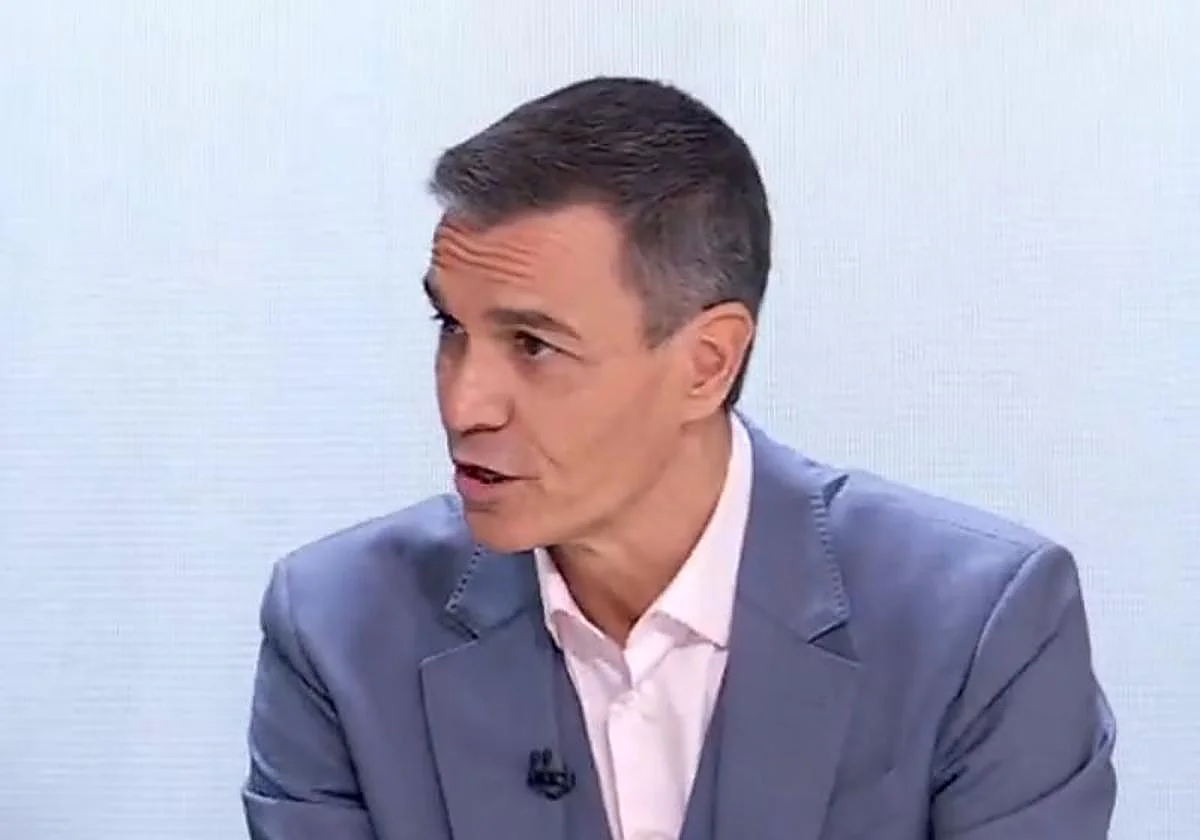
Tonight, eight days before the general elections, the new digital terrestrial television channel will broadcast in full Moncloa: Four Seasons, the documentary series that followed Pedro Sánchez and his team for about a year. Four episodes designed to reveal the inner workings of the Government’s presidency, with that curious feature that documentaries about power when made with the collaboration of those in power end up showing exactly what those in power want the public to see: one ends up knowing precisely what the power wants you to know.
The project spent more than a year trying to find a home on television and streaming platforms without much success. It finally premiered in 2024 in El País, subsequently appeared on YouTube, and, by 2026, on Movistar Plus+.
And now, at last, it has found its natural home.
A television with the right to push boundaries
La Séptima began its broadcasts on November 5. Four days later it interviewed Pedro Sánchez. The following Sunday it returned for another interview, this time with Alba Carrillo and Marta Márquez, in an atmosphere so cordial that at times one found it hard to tell whether one was watching a campaign interview or the renewal of wedding vows.
Between visit and visit, its electoral tracking has managed to position the PSOE as the leading political force and to contemplate a possible return to a majority that would give Sánchez the capacity to govern. Viewed across the programming, it helps draw an editorial landscape extraordinarily comfortable for the president.
And tonight, three ingredients that tend to work very well on television: Saturday, prime-time viewing, and Pedro Sánchez. Again.
At this pace, the truly novel thing would be a documentary about how a day unfolds at La Séptima without Pedro Sánchez.
Pluralism, that small formality
It is worth recalling that we are talking about a channel whose license was awarded by the Government last May, through a public bidding process whose resolution has been challenged in court, and among whose criteria for evaluation was precisely pluralism.
Pluralism. The phrase itself is a bit ironic.
We do not live in a Disney movie. We know the media have commercial interests, ideological affinities, and ties to power. We also know that absolute independence is a goal more often proclaimed in editors’ rhetoric than present on boards of directors.
But one thing is to have an editorial line, and another entirely to operate as the Government’s communications office with advertising breaks.
And when it is the Government itself that awards the license, the democratic demand should be even higher.
Propaganda has lost even its shame
What I find especially lamentable about all of this is its extraordinary lack of subtlety. Political propaganda has historically produced works of considerable technical and intellectual sophistication. Here, it seems there is no longer any need to make that effort.
And that speaks volumes about the regard some have for the Spanish viewer.
A democratically mature society should be particularly combative toward these practices, regardless of who governs or what their political sympathies may be. What benefits your own side today could benefit those you despise tomorrow.
There is something rather tawdry about a channel newly admitted to DTT, granted a license by the Government, devoting a Saturday night during a campaign to showcasing the virtues of the president who runs it.
Fortunately, the documentary is titled Four Seasons.
Because, judging by La Séptima’s programming, there is only one season: Pedro Sánchez’s spring.