
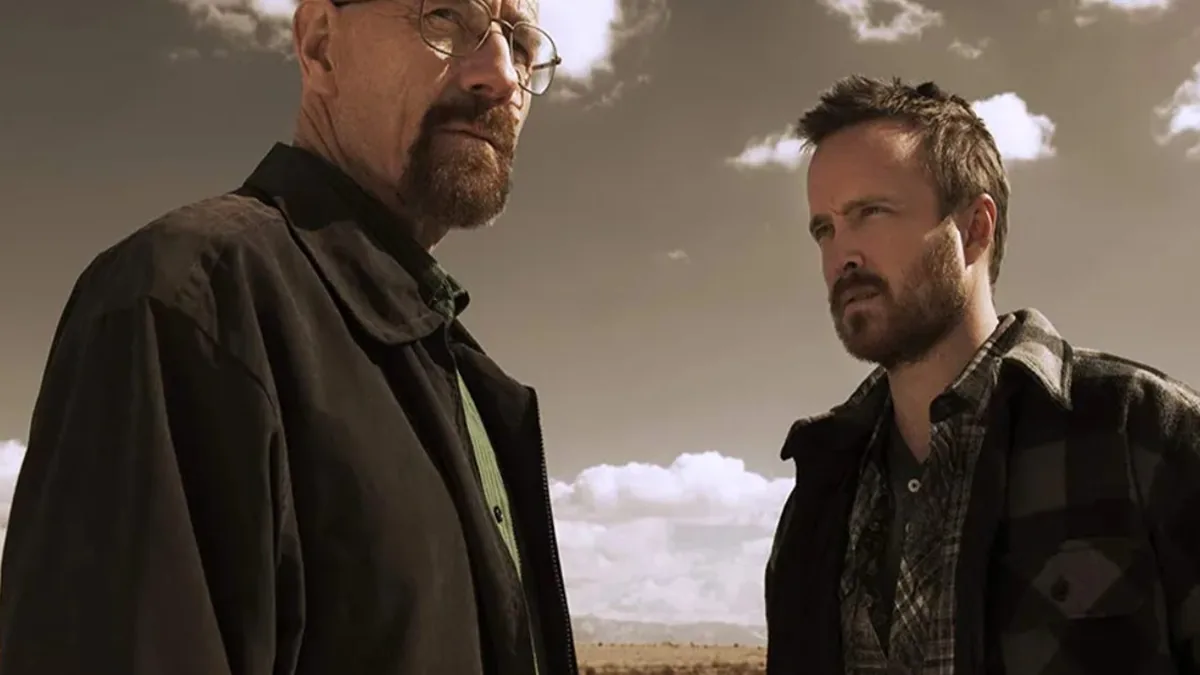
Breaking Bad holds the top spot in The New York Times’ selection of the 100 best TV series of the 21st century. The list, built from a survey of more than 500 industry figures, isn’t presented as an audience ranking: it offers a perspective on which series have defined television in recent decades.
The result gathers crime dramas, political satires, comedies, fantasy tales, and experiments in form. Its interest lies less in definitively answering which show is the greatest of all time than in illustrating which narrative models have gained prestige as television moved from network and cable domination to coexistence with streaming.
A ranking that speaks as much about HBO as about its series
The first takeaway is obvious: HBO places five titles among the top ten. The Wire, Succession, Game of Thrones, Veep, and Curb Your Enthusiasm represent very different eras and tones, yet share a television conception rooted in brand identity, creative freedom, and a commitment to seasons with a recognizable voice.
The Wire turned Baltimore into a map of institutions connected by inequality and bureaucracy. Succession moved the family tragedy to the heart of a media conglomerate, while Game of Thrones proved that a fantasy production could become a global event on the scale of a blockbuster.
The two comedies complete a notably meaningful image. Veep and Curb Your Enthusiasm are not merely light fare next to the major dramas: the ranking treats them as works capable of building a distinctive worldview on politics, social conventions, and the egos of their characters. Humor is also part of the 21st-century television canon.
The list doesn’t belong solely to the streaming era
Another relevant aspect is that the top 10 cannot be read as a celebration exclusively of Netflix, Prime Video, or any other platform. Breaking Bad originally aired on AMC; Mad Men likewise began on that network; 30 Rock came from NBC; Atlanta was a FX production, and Fleabag had its path tied to British television before reaching an international audience through the digital ecosystem.
This mix dismantles a common simplification: the so-called streaming revolution did not overnight replace traditional television. Many of the series enjoyed today on-demand were conceived for cable networks, general-interest channels, or public broadcasters, and later found a second life thanks to global distribution.
Therefore the selection also serves as a small industrial chronology. HBO’s auteur television coexists with NBC’s comedies, AMC’s drama, FX’s experimentation, and the new model of international circulation that platforms helped solidify.
The full top 10: a mix of genres and generations
This is the order of the first ten positions, presented as part of a list of 100 titles:
- Breaking Bad
- The Wire
- Mad Men
- Succession
- Fleabag
- Game of Thrones
- Veep
- 30 Rock, known in Spain as Rockefeller Plaza
- Curb Your Enthusiasm
- Atlanta
The ordering also reveals an unusual cohabitation between titles with long-standing television traditions and more recent works. Mad Men, 30 Rock, and Curb Your Enthusiasm belong to a generation when weekly broadcasts remained central, while Fleabag and Atlanta represent a stage in which a show can circulate across very different markets and audiences without relying on a single schedule.
From moral transformation to transformation of form
Breaking Bad leads the ranking with a seemingly classic tale of moral descent: Walter White goes from a sick high school teacher to an increasingly powerful criminal figure. Yet its top placement also encapsulates a formal shift: television began to trust that viewers would follow a character’s gradual changes for years without requiring immediate redemption.
In The Wire, the real protagonist is not a single person but the functioning of a city. Mad Men uses the advertising world to observe social change in the sixties; Atlanta blends humor, nightmare, and social commentary; and Fleabag uses breaking the fourth wall to turn intimate moments into an awkward conversation with the audience.
They are very different strategies, but they share a feature: the series ceased to be seen as a stretched-out movie and began to be celebrated as a narrative form with its own rules. The length, the season-by-season structure, and the possibility to develop supporting characters allowed conflicts to be explored in ways a film could scarcely deploy with the same level of detail.
Why it matters that they’re together
A list like this is bound to spark disagreements. There are titles many viewers would consider essential that are missing, and any selection depends on who votes, what is understood by influence, and how much weight is given to popularity versus innovation.
Precisely for that reason it’s more useful to read it as a portrait of a period than as a definitive verdict. The canon chosen by The New York Times acknowledges crime, politics, fantasy, and satire, but also uncomfortable comedy, authorial perspective, and stories centered on characters who do not seek to be liked.
The position of Breaking Bad captures the most visible consensus, but the real story is in the aggregate: the best series of the twenty-first century, according to this poll, do not belong to a single channel or to a single genre. They are the result of a television that learned to compete with cinema without ceasing to be television.