HBO Max debuts today with The Good Daughter, a new suspense series based on Karin Slaughter’s novel of the same name. The platform releases all six episodes at once, a choice that shifts the storytelling toward binge-ready viewing rather than a tale that demands waiting a week between chapters.
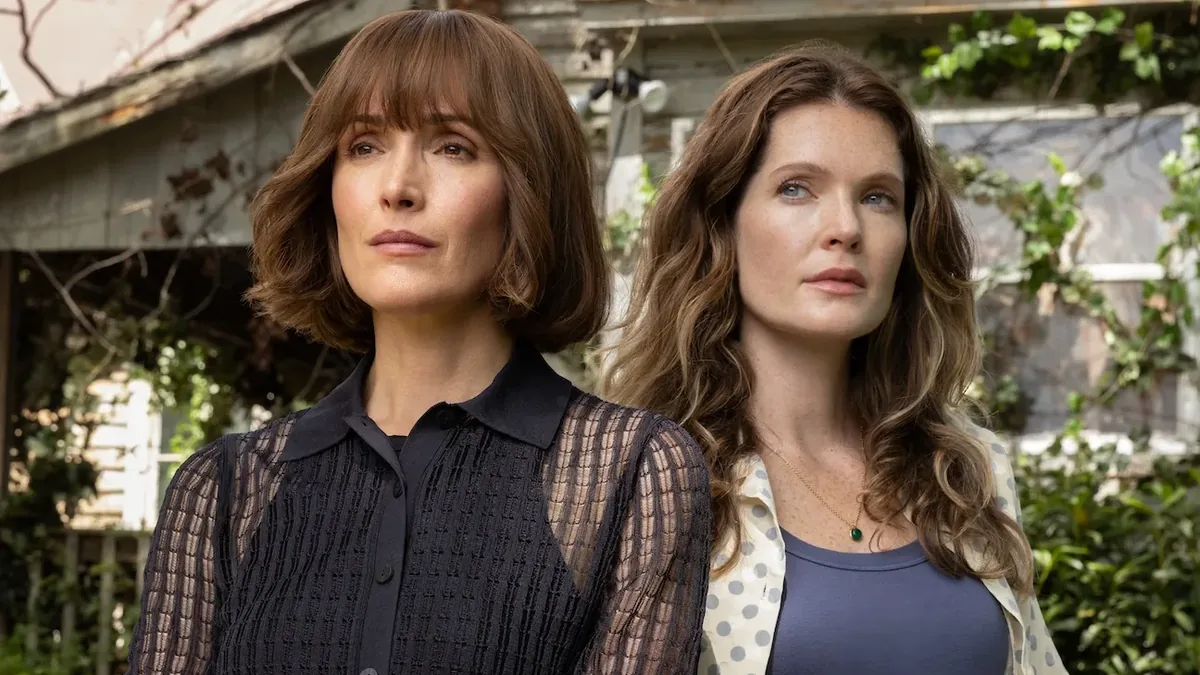
The series follows Sam and Charlie Quinn, two sisters fractured by a family trauma that resurfaces when Charlie finds herself implicated in a murder investigation. The appeal of the adaptation isn’t limited to uncovering who committed the crime; it also asks whether the two can repair their relationship after twenty years apart.
Six Episodes Available: What It Changes for Viewers
The full-season premiere alters how one engages with a story built around a central mystery. Viewers can move at their own pace and in a single sitting determine whether the criminal case truly serves to deepen the bond between the sisters or ends up as little more than a string of twists.
This format also eliminates one of the common tools of weekly series: the inter-episode dialogue. The Good Daughter wont need to sustain weeks of anticipation for every installment, but instead must persuade the audience to keep watching the next chapter in a single streaming experience.
The compact runtime favors a plot rooted in a heavy past. Sam left her family surroundings during adolescence and went on to practice law in New York, while Charlie stayed where the events that marked them occurred. The new case compels both paths to intersect once more.
The Author Takes Part in the Adaptation, But That Does Not Guarantee the Result
Karin Slaughter appears in the project as creator, writer, and executive producer. Her presence offers a tangible advantage: the very person who fashioned the characters and conflicts of the novel also contributes to the translation to television, which can help preserve the tone and priorities of the original story.
Yet a writer’s involvement does not automatically ensure a faithful or effective adaptation. The shift to a different format demands reorganizing information, pacing reveals, and giving a visual dimension to emotions that, in a novel, can be carried by interior narration. The true test will be whether the series manages to sustain the balance between crime thriller and family drama.
That balance is particularly crucial here. The investigation into the murder of a school principal and a student provides the suspense engine, but the series needs the reunion of Sam and Charlie to carry real weight. If the mystery advances without transforming the protagonists, the family trauma risks becoming mere atmospheric backdrop.
A Sister Story Before Another Criminal Case
The premise opens with an event that happened twenty years earlier: a man entered the Quinns’ home and killed their mother. Sam survived and left; her father, Rusty, stayed in the family circle with Charlie. Rusty’s call becomes the trigger that brings the two sisters back into contact.
The series uses that past to frame two distinct approaches to dealing with pain. Sam has tried building a life far from her family, while Charlie has remained tied to the place and to her wounds. The current case not only threatens to unearth secrets; it also forces the two to decide what they want to do with a story that never fully closed.
That is why the appeal of The Good Daughter lies less in the number of crimes it presents than in the relationship between its characters. The investigation must probe the sisters, confront their versions of the events, and reveal how much of their past they have managed to hide even from themselves.
Rose Byrne and Meghann Fahy Lead the Cast
Rose Byrne plays Samantha Quinn and Meghann Fahy portrays Charlotte. Brendan Gleeson completes the core family as Rusty, the sisters’ father. The cast also includes Harper Steele, Paula Malcomson, Jake McDorman, and Olivia Williams.
The time jumps bring in Audrey Grace Marshall and Drew Cheek as the younger versions of the protagonists. Steph Green helms all six episodes, a notable detail in a tightly focused limited series: having a single director can help sustain a consistent visual identity from start to finish.
The project also underwent a cast change before reaching screens. Jessica Biel was initially linked to the lead role but departed, and the casting was reorganized. That anecdote reveals some of the production’s evolution, though it doesn’t in itself yield a definitive verdict on the final outcome.
Karin Slaughter’s TV Track Record
The Good Daughter isn’t Slaughter’s first leap into television. Pieces of Her, another adaptation of the author’s work, previously arrived on Netflix and ended after a single season. That precedent doesn’t dictate the fate of the new series, but it shows that literary recognition alone isn’t enough to guarantee a durable adaptation.
The main difference here lies in the creative control Slaughter wields over the project. Her involvement may narrow the gap between the literary material and the series, though the outcome will still depend on writing decisions, editing, direction, and performances that can only be assessed once the six episodes are seen.
For viewers, the proposition remains fairly clear: a six-episode thriller designed to be watched in one sitting, with a crime as the starting point and a broken family at its true emotional center. The one-shot premiere makes it possible to quickly determine whether the adaptation turns that promise into a self-contained story or whether the mystery weighs more than its characters.