
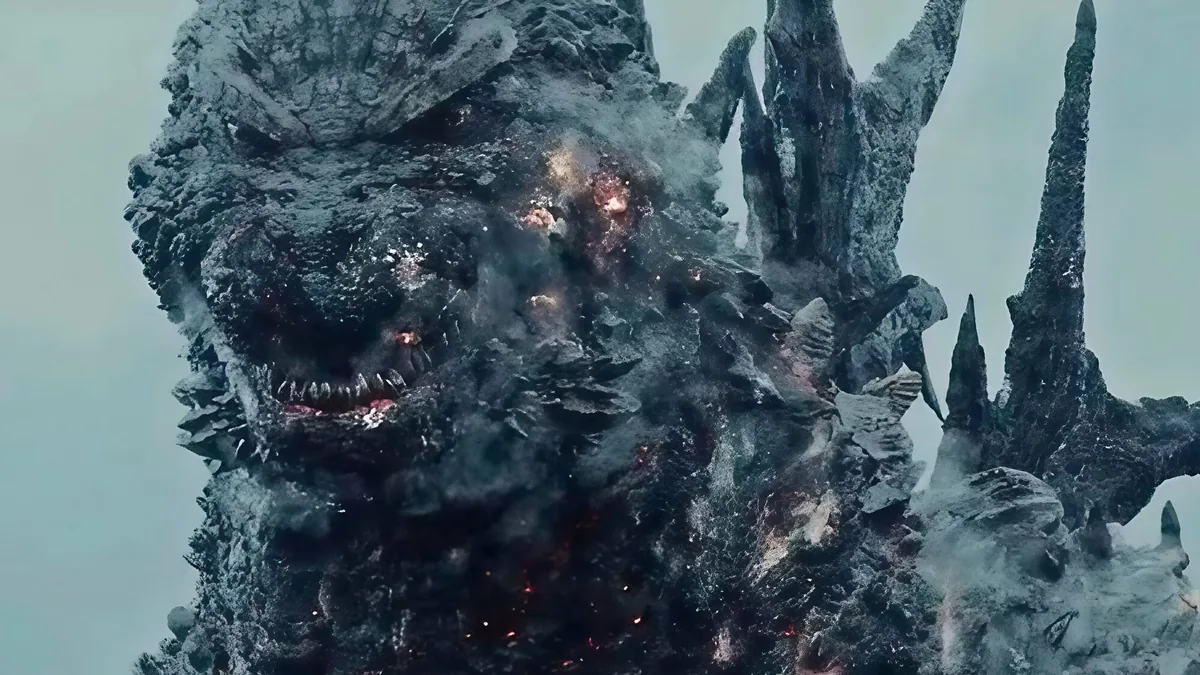
Godzilla Minus Zero does not build its spectacle solely from the tradition of the Japanese monster. Takashi Yamazaki has cited three very different films as references for approaching the story: Intolerance, The Thing (The Thing from Another World), and Hijos de los hombres (Children of Men). The connection among them helps to understand how the film tries to turn gigantic chaos into a close and tangible experience.
The choice is striking because none of those works belongs exactly to the same kind of cinema. D.W. Griffith’s epic blockbuster deals with historical grandeur, John Carpenter’s classic explores distrust within an isolated group, and Alfonso Cuarón’s film uses dystopia to trap the viewer in the midst of a perpetual crisis.
Three References to Lift Godzilla Beyond Simple Spectacle
The common thread lies not so much in their plots as in the way they portray a threat that overwhelms the protagonists. In all three films, the characters confront forces that alter their surroundings and compel them to make decisions under extreme pressure.
This reading helps to better understand Yamazaki’s approach. The director doesn’t seem to seek merely to have Godzilla or King Ghidorah appear imposing, but to ensure their presence has visible consequences in the lives of those who are caught around them.
It is useful to separate the data from the interpretation. Yamazaki has spoken of these films as references for his work; the relationship between each influence and the final result is a reading of their narrative and formal effects, not a claim that Godzilla Minus Zero reproduces their plots.
Intolerance: Destruction Seen Through People
Released in 1916 and directed by D.W. Griffith, Intolerance is a monumental production that links different historical episodes to reflect on violence and the loss of empathy. Its scale is colossal, but its interest also lies in observing how grand events strike concrete individuals.
That human dimension is what can be most clearly translated to Godzilla’s cinema. The monster represents a threat of extraordinary proportions, but the dramatic impact depends on the film showing what happens to relationships, fears, and the decisions of those who must survive.
The reference to Griffith, therefore, does not imply that Yamazaki copies the structure of Intolerance. Its usefulness seems to be in reminding that a spectacular film needs a recognizable emotional scale: the larger the catastrophe, the more important it is to know who is suffering.
The Thing: a Threat That Transforms Space
The classic by John Carpenter shifts away from historical epic toward claustrophobic horror. In The Thing (The Thing from Another World), a group of researchers is isolated against a creature capable of imitating and absorbing life forms, which turns any body and any ally into a potential threat.
The connection to King Ghidorah and its transformative ability points to a concrete idea: danger does not have to appear in the same way at all times. When a creature can alter its relationship with the environment, the setting stops being a mere backdrop and becomes an active part of the conflict.
There emerges an important difference between the traditional monster and a more adaptable threat. The creature not only destroys from the outside; it can also modify the characters’ perception of what surrounds them. The result is a kind of suspense that does not rely solely on the size of the enemy.
Children of Men and the Urgency of Not Being Able to Escape
The third reference is Children of Men, Alfonso Cuarón’s 2006 dystopia. The film follows its characters in a world on the brink of collapse and uses long takes to convey the sense that violence could erupt at any moment.
As Yamazaki has explained, that use of the camera served as inspiration for planning his film’s staging. The aim would not be to observe the catastrophe from a safe distance, but to keep the viewer inside it for as long as possible.
The interpretation becomes particularly relevant in a giant-monster movie. Long takes can make the disaster appear less orderly and more unpredictable, because they reduce the chance to cut away just when the situation becomes uncomfortable or dangerous.
Where to Watch the Three Films in Spain
Platform availability can change over time and according to each service’s agreements. The options listed for Spain are as follows:
- Intolerance: Acontra+, Filmin, Plex and Tivify, with free options noted on the last two services.
- The Thing (The Thing from Another World): Movistar Plus+ and SkyShowtime.
- Hijos de los hombres: Movistar Plus+.
Beyond serving as a tour through three very different moments in cinema history, this small itinerary shows what elements a monster movie can draw from outside the genre. Griffith contributes the look at the victims of history, Carpenter turns the environment into an unstable threat, and Cuarón works the urgency through movement.
The bet of Godzilla Minus Zero is to combine these lessons with the tradition of one of the most recognizable creatures in Japanese cinema. The result does not depend solely on showing a larger scale, but on making each appearance of the monster alter the space, the pace, and the experience of the characters who strive to survive.