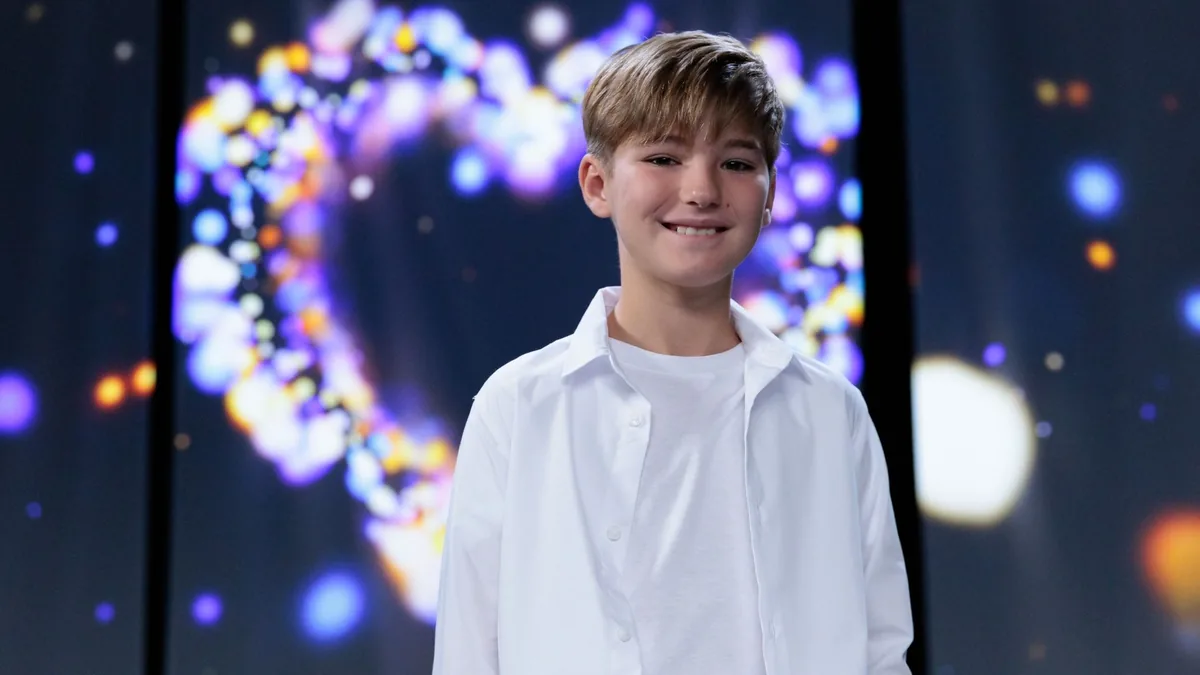
Spain has only won Eurovision Junior once. The triumph arrived in 2004, during the contest’s second edition, with María Isabel and Antes muerta que sencilla. Now, the country returns to compete in the 2026 gala with Lucas Paulano, who will perform Cuore Bello (Te Quiero, Te Quiero) from Malta.
The final takes place this Saturday, October 24 starting at 21:00 local time at the Malta Fairs & Conventions Centre in Ta’ Qali. The Spanish representative will perform in the sixteenth and final position of a show that could add a second trophy to the national tally.
Spain’s sole victory came in 2004
María Isabel prevailed in the Lillehammer edition with 171 points. Her result was the first and, to date, the only triumph for Spain in the children’s version of the festival, though that score also carried historical significance for the contest as a whole.
The 171 points achieved by Spain’s entry stood as the festival’s record until 2015. That year, Maltese Destiny Chukunyere reached 185 points with Not My Soul and surpassed the mark Spain had set eleven years earlier.
The María Isabel precedent thus remains, to this day, the central datum for evaluating any new Spanish bid. The victory has not been repeated, but the country has frequently managed to stay among the top ranks of the standings.
A history with six podium finishes
Spain’s track record in Eurovision Junior includes one victory, three second places and two third places. In total, six appearances on the podium, a figure that explains why every return of Spain to the contest is typically accompanied by high expectations about its chances.
The first runner-up came right after the victory. In 2005, Antonio José finished just three points behind the winner, Ksenia Sitnik, who gave Belarus the triumph with My Vmeste. The margin shows just how close Spain was to chaining two consecutive victories.
After returning to the contest, Spain went back onto the podium with Melani García and Soleá, who finished third in their respective editions. Later, Sandra Valero secured another second place in 2023 with LOVIU, cementing the recent era as one of the most competitive periods for the country.
The chronology of Spain’s participation
Spain was one of the founding countries of Eurovision Junior and debuted in the first edition, held in 2003. It participated during the early years of the festival, but then withdrew for a long spell before returning in 2019.
The withdrawal occurred at a time when RTVE questioned how well the format aligned with the public broadcaster’s values and its approach to representing minors. The comeback reintroduced Spain to a stage that had previously helped launch young artists and which, since then, has again become part of its television calendar.
The 2026 edition marks Spain’s twelfth participation according to the announced path for Lucas Paulano’s bid. The figure should be read with the caveat of a several-year pause: this is not an uninterrupted presence since 2003.
Who represents Spain in 2026
Lucas Paulano arrives at Eurovision Junior after winning La Voz Kids 2025. The Jaén-born performer also contributes to the composition of Cuore Bello (Te Quiero, Te Quiero), a song he has worked on with other authors, including Blas Cantó.
The Spanish bid begins from an element uncommon in the contest’s historical reviews: the performer not only lends voice to the song but has also participated in its creation. That allows presenting the performance as a proposal directly linked to its performer, though the final result will depend on the gala’s voting.
During the last week, the bid has led the fans’ bets. That data reflects pre-show expectations, but it does not equate to an official forecast nor guarantees a specific position in the final ranking.
What the audience should know before the show
- Date: Saturday, October 24, 2026.
- Time: 9:00 PM local time.
- Venue: Malta Fairs & Conventions Centre in Ta’ Qali.
- Spanish representative: Lucas Paulano.
- Song: Cuore Bello (Te Quiero, Te Quiero).
- Performance order: sixteenth and final position.
- Spain’s sole victory: María Isabel, in 2004.
Malta hosts the festival for the third time, making the host country the first to reach that figure in the history of Eurovision Junior. The Maltese stage will also be the starting point to assess whether Spain can translate its solid recent track record into another victory.
The key fact shaping the reading of the gala is simple: Spain does not need to prove it can compete for the top spots, because it has done so on several occasions. The question for 2026 is whether Lucas Paulano can surpass the latest ceiling for the country: lifting the trophy that María Isabel won more than two decades ago.