There are films whose ending seems inseparable from their identity, but that wasn’t always the final that was written, shot, or shown to early audiences. Pretty Woman, Pretty in Pink, I Am Legend, and The Little Shop of Horrors changed their conclusions for very different reasons: commercial pressures, responses from test screenings, tonal issues, or decisions made in the editing room.
This selection doesn’t rank cinema’s most shocking endings. It gathers seven cases in which tracing the discarded versions helps us understand how a film negotiates between creative intent and audience response. It’s worth reading with spoilers for the titles mentioned.
Pretty Woman: from a dark drama to a romantic fairy tale
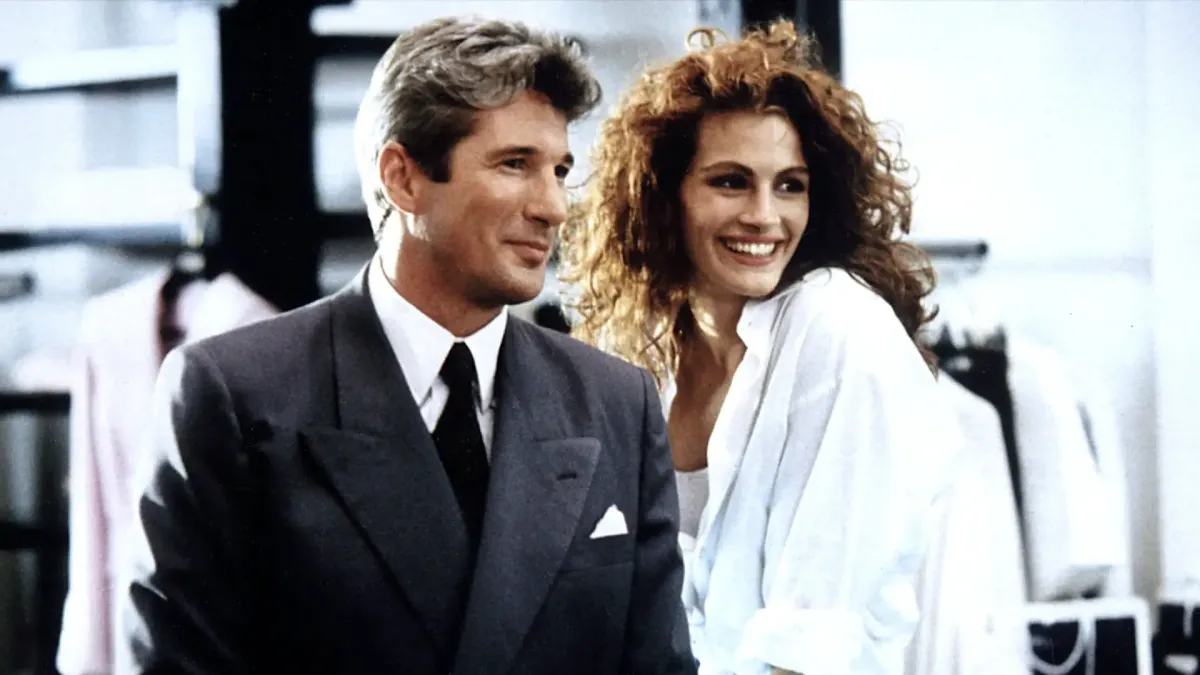
The film that turned Julia Roberts and Richard Gere into one of Hollywood’s most popular pairs began as a far rougher project. The original script, known as 3,000, didn’t present a romantic fantasy, but rather a portrayal of a relationship shaped by inequality, money, and exploitation.
In that version, Vivian never becomes integrated into Edward’s world. The ending was much more pessimistic and underscored that the arrangement between them had an expiration date. The transformation of the project was decisive: Disney and director Garry Marshall steered the story toward the romantic comedy and the happy ending that the audience now associates with the film.
The change was not merely a tonal tweak. It altered the meaning of the entire story. The film stopped being a bitter look at the transaction of affection and became a fantasy of social ascent and sentimental redemption, a formula that helped define the romantic comedy of the nineteen-nineties.
Pretty in Pink: the couple that the audience didn’t want
John Hughes wrote Pretty in Pink around a protagonist who had to choose between two very different bonds. In the version that was initially shot, Andie, played by Molly Ringwald, ended up with Duckie, her lifelong friend, instead of reuniting with Blane.
Test screenings changed the film’s direction. The audience response was negative, and the studio decided to re-shoot the final stretch so that Andie and Blane would end up together. The adjustment required changing the emotional resolution of the story and granting Duckie a new love interest.
The case demonstrates how a test screening can function as a kind of industrial referendum. Not only the final couple was modified: the film’s reading of desire, friendship, and class differences shifted. The decision paid off at the box office, but it also left an uncomfortable question about how much room a story has when the audience rejects its ending.
I Am Legend: who was really the monster
The Will Smith-starrer adaptation reached theaters with a sacrificial ending. Robert Neville faces the creatures that surround his shelter and dies to protect Anna and the baby Ethan, while the cure he has developed survives.
The alternate ending offers a reading much closer to Richard Matheson’s novel. The infected do not act solely as violent beasts: they retain organization, recognize their own, and come to reclaim one of the creatures Neville holds captive. When the protagonist realizes what he is doing, the story shifts its perspective.
In that version, Neville ceases to be the last representative of humanity resisting an irrational threat. He could also be the monster that invades, captures, and experiments with a new society. The released version is more direct and heroic; the alternative is more uncomfortable because it turns the title into an accusation against the protagonist himself.
The Little Shop of Horrors: a plant with a license to win
Frank Oz’s musical had a very specific problem: its original ending was too dark for the audience expecting a song-and-dance comedy. In that cut, Audrey II triumphs, Seymour dies, and the carnivorous plants spread to conquer New York.
The production had invested a considerable amount of resources in that ending, but test-screen reactions were so negative that another ending was shot. The released version preserves the moral-fable tone, though it offers a much gentler resolution for Seymour and Audrey.
Over time, the alternate ending has become a cult piece and allows seeing the film from a different perspective. The story works differently when the punishment does not arrive in time and Seymour’s ambition finds no redemption. The discarded ending wasn’t a minor add-on: it carried through to its ultimate consequences the plant’s logic and the granting of wishes.
Clerks: when Kevin Smith decided not to kill off his protagonist
Clerks ended up as a generational comedy about two clerks stuck in a store, but the initial ending conceived by Kevin Smith was much more brutal. Dante was killed during a robbery after a day that seemed absurd and repetitive.
Smith ultimately cut that scene because he felt it broke the film’s tone and diverted attention from the Dante-and-Randal relationship. The final cut leaves the characters in a frustrating but recognizable routine, without turning the story into a sudden tragedy.
The decision helps explain part of the film’s strength. The ending we know doesn’t resolve anything, and that is precisely why it fits a movie built on repetition. The discarded ending would have transformed the portrayal of precarity and boredom into a much more conventional moral fable.
Blade Runner: three films within one question
The case of Blade Runner does not depend on a single alternate version, but on the evolution of the edit. The 1982 release included voiceover narration and nature imagery that softened the ambiguity of Rick Deckard and Rachael’s ending.
With the later release known as the Director’s Cut, those explanations disappeared and the film regained a more enigmatic atmosphere. The final version known as the Final Cut further refined various visual and technical aspects.
The change shows that editing can alter a story even without shooting new scenes. When the voice explaining what happens is removed, the viewer stops receiving a closed answer and begins reading the clues about Deckard, the replicants, and identity as part of the central conflict.
The Butterfly Effect: the ending that commercial cinema did not want
The Butterfly Effect arrived in theaters with Evan trying to correct his choices and build a possible life with Kayleigh. It is a bittersweet ending, yet relatively accessible for a film that had toyed with time travel, trauma, and unpredictable consequences.
The director’s cut offers a much more radical exit: Evan travels back to his birth moment and chooses to prevent his own life from beginning. The choice eliminates the possibility of repeating the cycle, but makes the solution an absolute sacrifice.
The difference between the two versions sums up two ways to close a story about changing the past. One offers a future opportunity; the other argues that some wounds can only be stopped through an irreversible renunciation. For the commercial premiere, the more open option prevailed, while the alternate cut stood as a more extreme reading of the same dilemma.
These cases share a common thread: the ending isn’t decided solely in the script. Test screenings, studio strategy, the genre to be sold, and the confidence that the audience will accept an uncomfortable resolution also come into play. Sometimes a change saves a film; other times it reveals how much was lost when a story stopped daring to go to its ultimate consequences.