
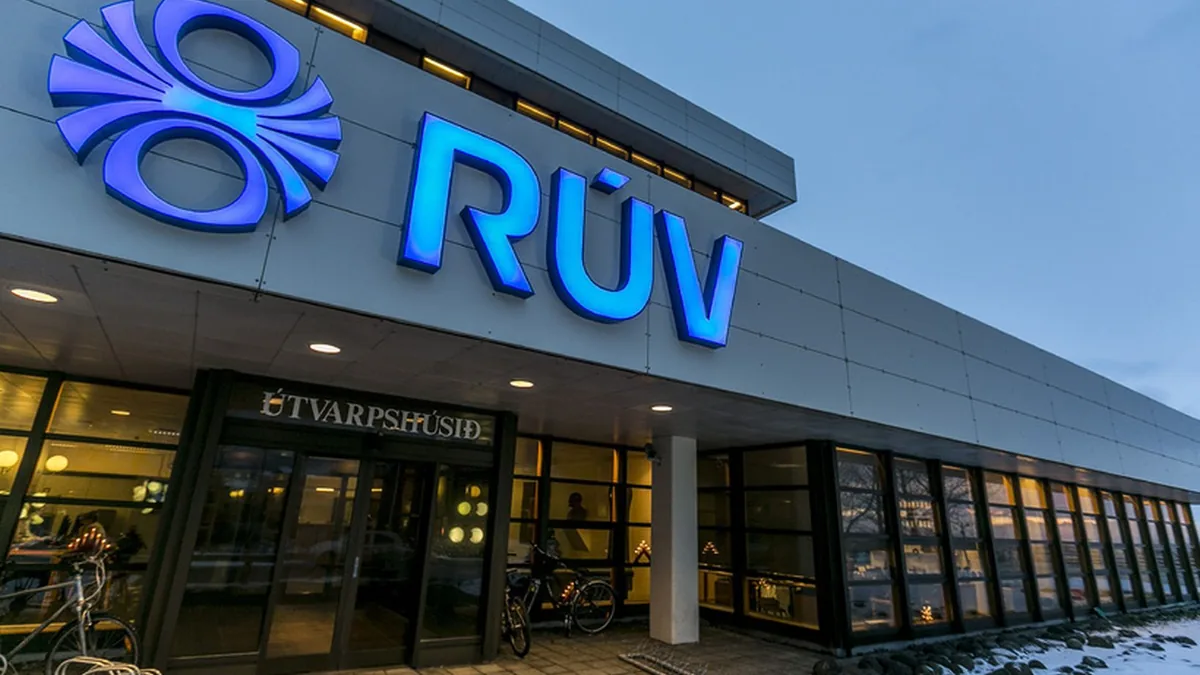
Iceland is set to stay out of Eurovision 2027 if Israel participates in the contest. Six of the nine members of the board of the Icelandic public broadcaster RÚV have asked its director-general to inform the European Broadcasting Union (EBU) of the country’s refusal to compete in the next edition under those conditions.
The proposal does not yet amount to a formal withdrawal, but confirms that Iceland’s position following the 2025 boycott remains in force. The festival is scheduled to take place in Burgas (Bulgaria), from May 11 to 15, 2027, in a context marked by the divergent decisions of several European public broadcasters.
A Majority of the Board Calls to Maintain the Withdrawal
The initiative passed at a meeting of the RÚV board held on September 30. Most members believe the corporation should inform the EBU that Iceland will not participate as long as Israel remains among the participating countries.
The move follows a document approved by RÚV’s leadership in November of the previous year, calling for Israel’s exclusion from the competition. According to the broadcaster’s stated position, the EBU has not yet provided a substantive response that would change the circumstances considered by the Icelandic governing body.
The chair of the board, Stefán Jón Hafstein, has noted that the broadcaster’s stance has not changed. The key, therefore, is not a new decision about the conflict, but the willingness to maintain an institutional line that had already conditioned Iceland’s participation in the festival.
The Decision Still Has to Run Its Course
The request from six board members marks a clear political direction, but the process still needs to materialize. The director-general of RÚV would have to officially notify the EBU of the stance, the body responsible for coordinating the contest and managing its participation framework.
This gap between an internal proposal and an officially announced withdrawal is important. Until RÚV completes that procedure, Iceland cannot be formally considered out of Eurovision 2027, even though the backing for the initiative leaves little room to interpret that the broadcaster is planning a normal return to the contest.
The situation could also evolve depending on the final lineup of participants and the decisions taken by other public broadcasters. Israel’s presence is the condition that triggers Iceland’s refusal; if that element changes, the scenario laid out by the board could require a new assessment.
A Divided Europe Map Ahead of Eurovision 2027
Iceland would not be the only country harboring a rejection stance. Ireland has already confirmed that it will not compete in Eurovision 2027 and will also not broadcast the festival, considering that the humanitarian circumstances that motivated its earlier decision remain in place.
Ireland’s position goes beyond not sending a bid. By also forgoing the broadcast, RTÉ makes its decision an institutional gesture, with effects both on the country’s participation and on the Irish public’s relationship with the televised event.
The Netherlands case shows, on the other hand, that the outlook is not closed. The country has decided to participate in 2027 after initially considering abstaining. The participation will also involve a change in its internal structure: NPO will take on the Dutch candidacy, while NOS will handle the broadcast of the semifinals and the final.
The difference between these cases reveals that broadcasters are not acting with a united front. Some maintain the boycott as a political and humanitarian response; others have chosen to stay in the competition, even as they introduce changes to how they organize their representation.
Spain Has Not Yet Closed Its Decision
The Spanish position remains pending final confirmation. RTVE president José Pablo López said on September 22 that the Corporation intends not to participate in Eurovision 2027, a stance that still must pass through the Board of Directors.
The matter is expected to be discussed around mid-October, so Spain does not yet stand at the same level of certainty as Ireland. The RTVE president’s statement sets the current direction for the public body, but the governing body must complete the procedure to turn it into an official decision.
For the festival, Spain’s stance carries special weight due to RTVE’s membership in the so-called Big Five, the group of major contributors to the EBU that gains direct access to the final alongside the host country. An eventual absence would affect not only the Spanish candidacy but also reduce the presence of one of the contest’s main markets and would alter the political reading of the final lineup.
The EBU Faces Another Edition With Sensitive Decisions
The controversy is not limited to the number of countries on stage. It also affects the EBU’s authority to maintain a common format while several public broadcasters question the presence of one of its participants.
The Icelandic case again brings to the forefront a tension Eurovision has carried since 2025: the festival aims to preserve its character as a musical competition, while some members believe that Israel’s participation cannot be separated from the humanitarian situation in Gaza.
For RÚV, the next decision will not simply be about choosing a song or skipping a semi-final. The board is considering whether the public broadcaster should continue to be tied to an event whose composition it deems incompatible with the position it has defended so far.
The final portrait of Eurovision 2027 will depend on the upcoming moves by the EBU, the formalization of Iceland’s withdrawal, and the vote RTVE will face. For now, Iceland stands again among the countries conditioning participation on the absence of Israel, while the Netherlands confirms its return and Spain keeps an open decision that could prove decisive.