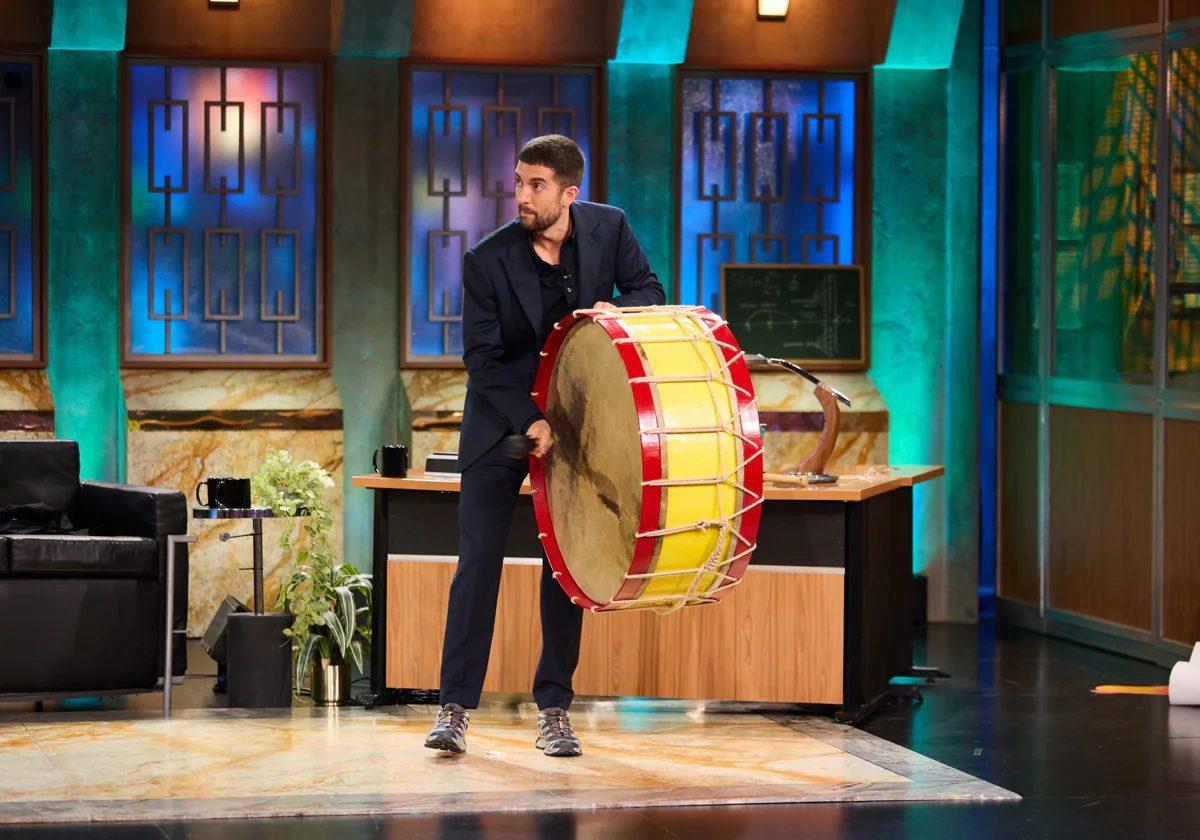
Pedro Sánchez has announced for this Thursday, October 22, an interview with David Broncano on La Revuelta, the La 1 program filmed in Madrid. The visit comes a little over a month before the general elections on November 29 and raises an unusual question: how is the appearance of a president prepared in a space built around improvisation?
Behind a conversation that aims to feel spontaneous, three distinct logics coexist: television production, political communication, and institutional protection. Each has its own priorities. The show wants to preserve its pace and humor; the guest needs to explain their messages without losing naturalness; and the teams responsible for the visit must coordinate with a functioning theater.
Broncano had publicly invited several candidates. Sánchez’s acceptance, reported by ABC and confirmed by sources close to the program to EFE, turns that TV proposal into a politically significant appointment.
The first negotiation occurs off the set
In this type of interview, the production and communications teams typically agree before recording on issues such as availability, approximate duration, format, and technical needs. The guest’s schedule must fit the program’s calendar. They may also discuss general thematic blocks, although that does not amount to agreeing on every question.
A leader’s team typically prepares potential delicate topics, reviews their main messages, and rehearses concise responses. There is a paradox: the more prepared a politician arrives, the more natural they must seem. A memorized speech can feel odd on Broncano’s sofa; a spontaneous remark can become the night’s most shared clip. The rehearsals and specific conversations that Sánchez has held before this interview are not public knowledge.
What changes when a president is between the audience and the cameras
A presidential visit requires broad coordination among the office’s security detail, the venue, and the production. On a theatrical studio set, crews must balance institutional needs with the work of cameras, sound, direction, assistants and on-site staff. The concrete operational procedures of this visit are not public.
The peculiarity of La Revuelta is that the audience also participates in the program’s atmosphere. Their laughter, silences, or reactions can alter the rhythm of a conversation. Unlike a traditional political interview, the host works with humorous interruptions, camaraderie with the collaborators, and sudden topic changes. The production must follow that dynamic without losing sight of the guest.
Can Broncano’s questions be agreed in advance?
Knowing the approach of an interview in advance does not mean controlling its content. The decisive line lies in editorial autonomy: one thing is coordinating the format and another is imposing questions or vetoing topics. There is no public information that allows asserting that the president has agreed to a closed questionnaire with the program.
For Broncano, the challenge will be to combine two registers: the humor his audience expects and the informational demand that accompanies a conversation with a candidate to lead the Government. A light question can open a revealing answer; a joke can also help dodge an awkward topic. Knowing when to press again will be as important as finding the right joke.
The political strategy of appearing on a late-night show
An entertainment program makes it possible to reach people who might not voluntarily choose a traditional political interview. In addition, a relaxed talk offers the guest the chance to show gestures, humor, and personal responses that don’t usually appear in an institutional appearance. The downside is the circulation of short clips, which can detach from their original context and take on a life of their own on social media.
In the midst of the pre-campaign, the frame of public television also matters. Broncano has offered his sofa to several candidates, and the treatment of each visit will be observed by both viewers and political opponents. Interest in these formats extends to long-form online interviews, as shown by Jordi Wild’s invitations to the candidates.
The most interesting unknown isn’t a supposed secret protocol: it’s how much real space the conversation will have to stray from the script. If Broncano keeps his style and Sánchez accepts his rules, the interview could reveal more about current political communication than a sequence of prepared answers.