
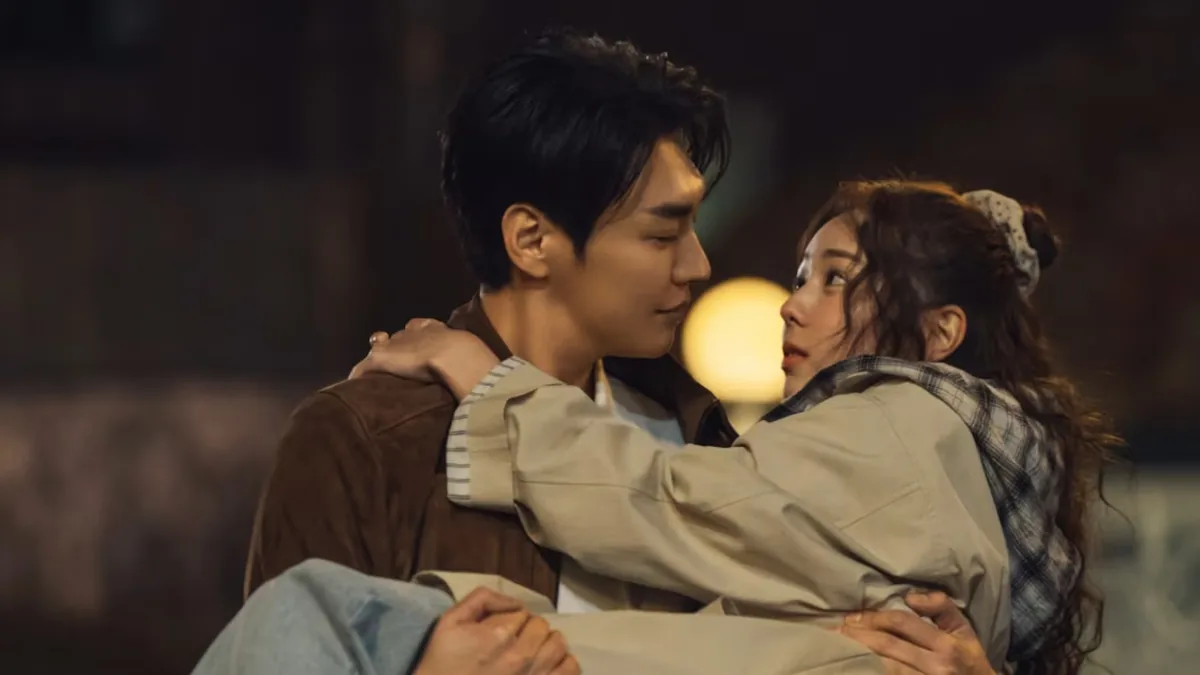
The Spark of Love is now available on Netflix since October 9, 2026, with an idea that goes beyond the impossible romance: here, the wealthy heir isn’t the one saving the heroine, but the person who physically depends on her to stay alive. The Korean series turns that necessity into the engine of a light, fantastical romantic comedy designed to progress without too many complications.
The fiction spans ten episodes between 50 and 60 minutes and stars Chae Soo-bin and Kim Young-kwang. Its story blends humor, romance and a hint of science fiction to tell how two people who, at first, have nothing in common end up establishing an arrangement that is as practical as it is sentimental.
The Heir Has No Control Over the Relationship
Na Bo-bae is a young screenwriter of romantic dramas who has never experienced a romance of her own. When she was a child she was struck by lightning, and since then, her body can generate electricity. The ability seems like just another oddity in her life until she meets Baek Ho-rang.
Ho-rang is the heir to a major corporate group, but his social position does not help him resolve the problem in front of him. He carries an artificial heart whose battery is running down and discovers that Bo-bae is the only person capable of recharging it.
That detail alters one of the most recognizable rules of Korean romantic comedies. The male character continues to fit the archetype of the powerful, seemingly unattainable man, but the relationship is not built around his ability to protect or save the heroine. On this occasion, his survival depends on her.
A Romance That Begins as an Agreement
The situation kicks off after an accidental kiss. Ho-rang proposes a deal to Bo-bae: he will help her experience romantic situations she can use in her work as a screenwriter and she will stay close to keep his artificial heart powered.
The setup works because, at least initially, it separates physical need from attraction. Both have a concrete reason to stay together, and the comedy arises from watching how a relationship organized as an exchange gradually takes on an emotional dimension neither of them anticipated.
There is also an interesting inversion in how Bo-bae is presented. Her clumsiness, lack of experience, and naive nature do not render her a passive figure. It is her extraordinary ability that makes the relationship possible, while Ho-rang must accept a vulnerability that money, connections, or authority cannot resolve.
The Fiction Within the Fiction Has a Clear Function
Bo-bae’s work as a screenwriter is not just a character trait. The series uses that profession to play with the codes of the K-drama itself: a protagonist who writes love stories must learn to recognize them when they appear in her life, even if they arrive accompanied by an artificial heart and a fairly unconventional electrical rule.
That device allows The Spark of Love to poke fun at some common tropes of the genre without fully abandoning them. There are misunderstandings, social differences, family conflicts and clashes between the leads, but the fantastical premise keeps the tale away from a completely realistic romantic comedy.
Kim Young-kwang Changes Gear
For fans of the actor, one of the attractions is seeing Kim Young-kwang in a more openly romantic register. After roles with a higher dramatic charge in productions such as Call It Love and Somebody, here he plays a character designed to blend arrogance, vulnerability and physical humor.
Chae Soo-bin, for her part, supports the more unpredictable component of the couple. Bo-bae does not master the romantic situations she tries to document for her script, and that distance between what she knows how to write and what she knows how to live drives a large part of the series’ pace.
A Self-Contained Season to Watch Without Getting Lost
The season’s duration is one of its most practical aspects. Its ten episodes offer a story with a defined arc and avoid, at least in its setup, that the romance must stretch across dozens of episodes or rely on too many subplots.
That doesn’t mean the series shuns conflict. Family, friends, and the consequences of Ho-rang’s condition complicate the initial arrangement, while the relationship grows in intensity. The difference is that the narrative seems to prioritize the couple’s evolution over an endless series of obstacles.
For those seeking an easy-to-follow K-drama, the format has a clear advantage: it allows binge-watching in a few days and to keep the thread without facing an overly long season. It is a choice closer to a self-contained romantic comedy than to a sprawling family saga.
What Netflix Viewers Can Expect
The series shares part of its DNA with titles like My Lovely Demon, another Korean production that uses a supernatural premise to bring together a couple with opposing interests. The difference is that The Spark of Love turns physical dependency into a concrete rule of the relationship, not merely a fantastical element of the world.
Its start can feel a bit slow, but the story gains momentum when the Bo-bae-Ho-rang agreement stops being a mere emergency solution. The chemistry between the performers and the contrast between their personalities sustain a progression that leans more on the charm of the couple than on big twists.
The result does not aim to reinvent Korean television romance. Its proposal is more specific: take the archetype of the distant heir, strip away part of the power that usually defines him, and force him to build a relationship from need and collaboration. Therein lies the spark that distinguishes this series within Netflix’s abundant romance catalog.