
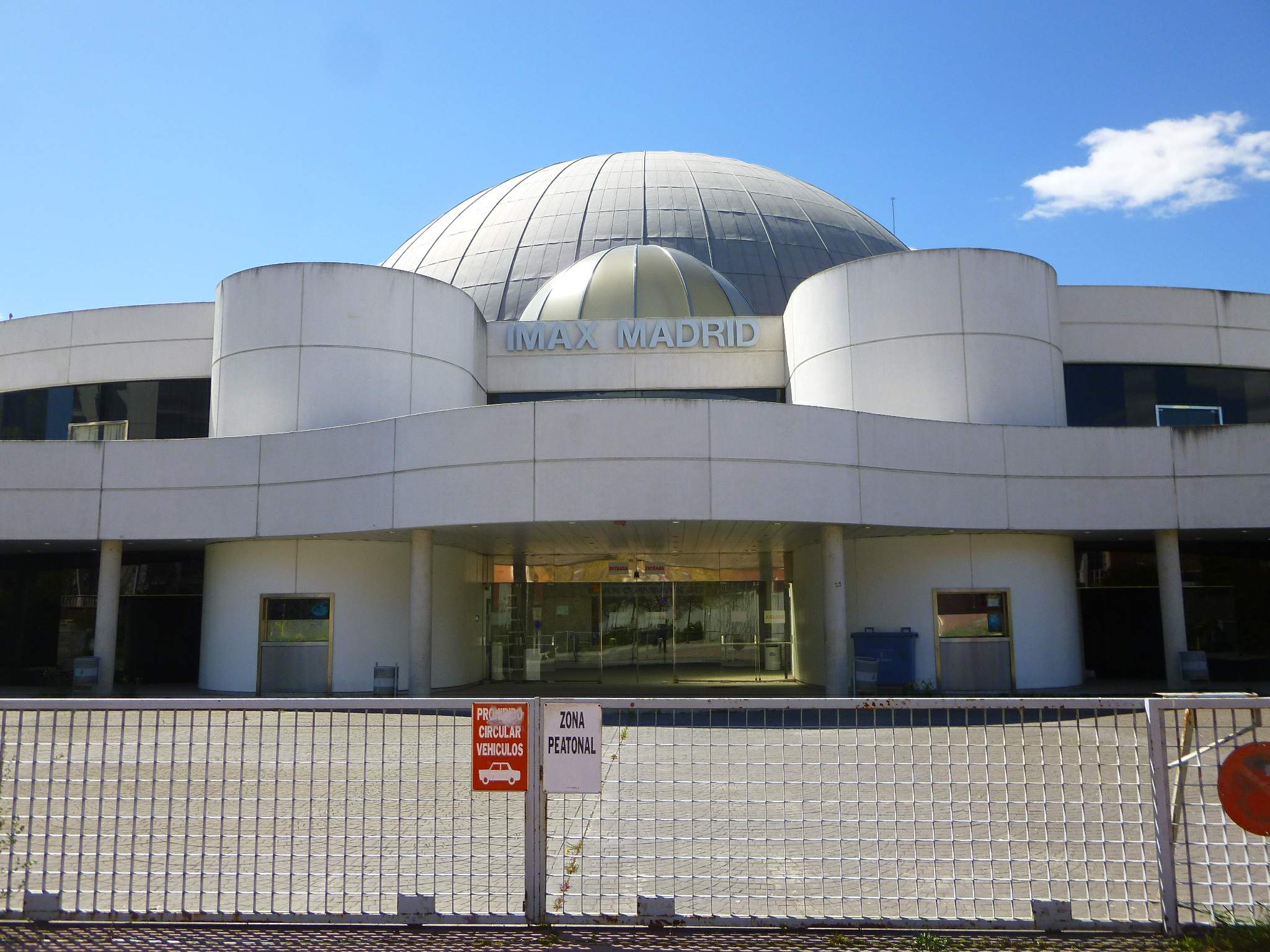
The future of one of Madrid’s largest musical theatres is being built far from the Gran Vía marquees. In Enrique Tierno Galván Park, the former IMAX cinema, closed since 2014, is being transformed into the Stage Gran Teatro Musical, a venue with more than 1,500 seats expected to open in autumn 2027. The location is not incidental: Stage Entertainment is preparing its third major stage in Madrid and, for the first time, is placing it outside the axis where its other two theatres are located.
The figures give a sense of the scale of the project. The building had 447 seats, according to the municipal file, and the new room will have more than 1,500, according to the producer. Capacity will multiply by more than 3.35, with at least 1,054 additional seats. The figure, obtained by comparing the two official numbers, reveals more than a mere expansion: a space built for one particular way of watching cinema is being redesigned for another model of show.
The announced premiere is Moulin Rouge! The Musical. But the more interesting question is not which title will open the curtain, but whether a major musical can turn another part of Madrid into its own cultural destination, without relying on the tourist and commercial circuit surrounding Gran Vía.
From the cinema’s 447 seats to more than 1,500 seats for musicals
The Madrid City Council described the old IMAX in 2023 as a building of about 7,765 square meters, with three floors and a basement, a raked auditorium, and technical spaces linked to the movement of the screens. By then it had been inactive for almost a decade. The new use demands far more than simply replacing projection with a live performance.
The municipal concession documents contemplate restructuring, expansion, and fit-out works to transform the cinema into a performing arts venue. A large-format musical requires height, machinery, a fly tower, and a technical system that were not conceived for that cinema hall.
The reform has had, additionally, a particularly visible episode. In October 2025 the dome collapsed during the works, with no injuries reported. The event serves as a reminder that this is a complex architectural transformation and also imposes a cautionary note: old photographs of the IMAX document its former appearance, not that of the finished theater.
In its July 2026 announcement, Stage placed the opening in autumn 2027. The project includes technology for large musicals and spaces for dining and activities. The date is, for now, a company forecast, not a public opening confirmed yet.
The real challenge: taking a major musical off Gran Vía’s usual circuit
Gran Vía is not merely an address. It is an ecosystem of theatres, hotels, restaurants, transport, and visitors that turns buying a ticket to a musical into part of a broader leisure plan. Stage is well versed in this mechanism: it runs the Lope de Vega, where The Lion King is staged, and the Coliseum, two of Madrid’s principal references in commercial theatre.
Meneses Street, beside Enrique Tierno Galván Park, forces us to rethink the experience. The new theatre will be located in Arganzuela, near the stations of Arganzuela-Planetario and Méndez Álvaro, with connections by Metro, bus, and Cercanías listed on Madrid’s official Tourism website. It cannot be said that it is a site without public transport. The question is different: how can the spectator identify that area with a great night of musical theatre?
Stage foresees restoration and multidisciplinary spaces within its new venue. The decision is coherent with a theatre that does not have, at its doorstep, the same concentration of offerings as Gran Vía. The producer seeks that the visit holds its own significance and does not depend so heavily on the immediate surroundings. Until the venue is up and running, however, it would be risky to assume a positive impact on the neighborhood’s commerce or a meaningful redistribution of tourist flows.
There is also a matter of urban scale. A hall with more than 1,500 seats can concentrate hundreds of arrivals and departures in a short window. The real experience will depend not only on the production staged but also on pedestrian mobility, signage, and the integration of the activity with a park and a residential area that did not grow around the theatre marquees.
A municipal building and a concession that could last four decades
Another important part of this story remains hidden when all focus is placed on the premiere. The former IMAX is a municipal property, and its transformation is organized through a public-domain concession, not a sale of the building. Stage has announced an initial operating term of 32 years, with possible extensions up to a maximum of 42. The magnitude of the commitment places the project on a scale distinct from a typical theatre season.
The arrangement allows activity to resume in a closed space since 2014, while the company takes on the risk of long-term operation and broad-scale construction. That the building is returned to use is a positive fact in terms of activity; whether this is its best possible cultural use is another question, and deserves to be distinguished from promotional rhetoric.
The possibility of reopening the original cinema had advocates. In a citizen proposal filed in Decide Madrid in February 2024, reopening the IMAX for screenings and educational activities was requested. The proposal does not prove it was the majority option among residents, but it does show that reconverting it into a theatre was not the only expectation for the building.
Precisely because it is a public building and a long-term operation, success should not be measured solely by ticket sales. It will also be relevant to examine whether the activity integrates with its surroundings and what real access it offers Madrid residents, beyond the allure of a blockbuster international production.
Moulin Rouge! will test Stage’s third major venue
The show chosen for the opening is Moulin Rouge! The Musical, based on Baz Luhrmann’s film. In the official programming for 2026-2027, Stage explains that the new venue will allow it to have, for the first time, three productions running simultaneously in Madrid. There lies the industrial key: having one more in-house space for titles that require specific infrastructure and extended stays.
The company estimates it can attract 1.5 million spectators annually to its Madrid theatres and expects that more than 75% will come from outside the city. These are corporate forecasts, not numbers already achieved, and they are not enough to anticipate profitability or occupancy of the future venue. But they help explain why the producer considers it insufficient to remain with two theatres on Gran Vía.
The competition for large spaces was already part of the debate about the future of Madrid’s musicals, as ActualTV has explained when analysing theatre availability. The IMAX project provides a very concrete answer to that capacity problem. The question remains whether it can also modify audience behavior.
The difference between 447 and more than 1,500 seats can be calculated today. The real test will come when the public begins to go to Meneses to see a big musical. Then it will be known whether Madrid has simply added another theatre to its offering or has begun to build a second performing destination outside its most famous avenue.