
Madrid has long boasted of having become one of Europe’s major hubs for musical theater. But this season’s lineup reveals something more specific: a large portion of its bigger productions arrive on stage with a brand that the audience already recognizes even before seeing the poster.
The Addams Family, Les Misérables, Wicked, The Lion King, or We Will Rock You draw on universes, characters, songs or titles that have been entrenched in popular culture for years. They are very different propositions, but share a particularly valuable advantage in a market that keeps piling up supply: they hardly need to explain to the viewer what they are selling.
This is no small matter. Madrid faces an autumn with an extraordinary concentration of major shows, from SIX to Dear Evan Hansen or Soul in the Air, in addition to several productions capable of occupying theatres for months. Such a lineup makes this season an authentic test to discover where the ceiling of the musical boom in Madrid lies.
In such a showcase, pre-recognition becomes a competitive advantage even before the curtain rises.
The Audience Already Knows What Each Poster Means
The Addams Family is probably the most obvious example. Gomez, Morticia, Wednesday, and Fester have been circulating for decades in comics, television, movies, and, more recently, streaming. The Madrid production can refresh the cast, set design, or staging, but does not need to build from scratch the audience’s interest in its protagonists.
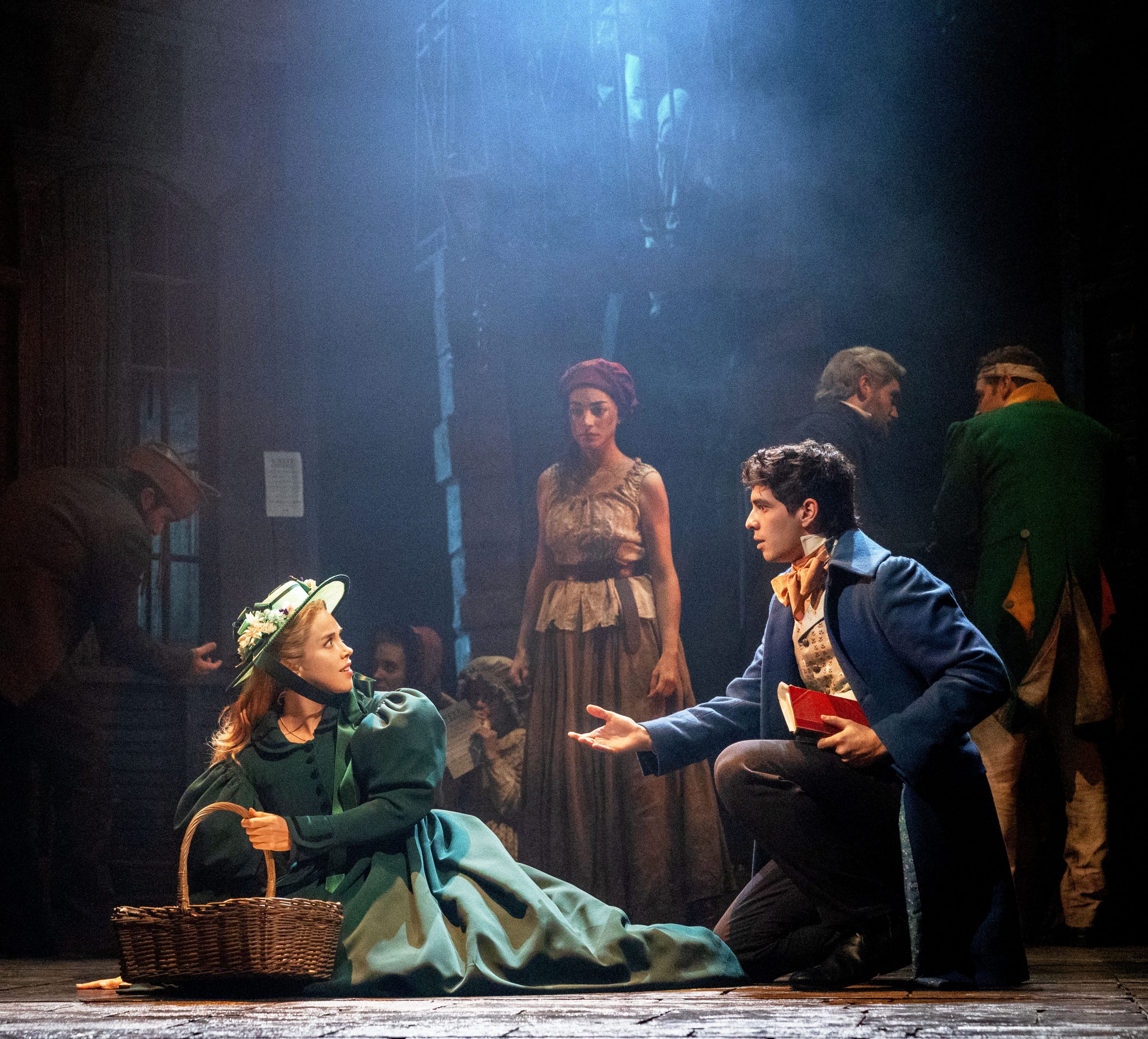
Les Misérables starts from a different kind of recognition. Victor Hugo’s novel is part of universal cultural heritage, but the musical itself has, after decades, become an international brand in its own right. For much of its potential audience, the title already conveys a certain scale of production, recognizable songs, and a concrete theatrical experience.
Wicked introduces another variant. Its enormous international run had already transformed the musical into a phenomenon well before its Madrid arrival, but film adaptations have broadened its notoriety even further beyond the usual theatergoing public.
The same logic appears in The Lion King, which has long been one of Madrid’s theater pillars, or in We Will Rock You, which turns Queen’s repertoire into the main commercial calling card.
Not all of these productions exploit intellectual property in the same way. Some derive from cinema or literature; others lean on extremely well-known songs; others have turned the theatrical performance itself into a brand.
But commercially they share something fundamental: the audience has prior information before making the purchase decision.
The More There Is on Offer, the More Expensive It Is to Start from Scratch
That is where the most interesting industrial aspect lies.
When a city hosts only a handful of major musicals at the same time, each production has more room to become visible. When supply grows, the shows don’t just compete with other leisure options: they begin to compete among themselves for the same time, attention, and audience budget.
In that scenario, a recognizable brand lowers one of the first barriers of marketing.
A completely new show must first get the audience to remember its name, then explain what it offers, and finally convince them to buy a ticket whose price may represent a meaningful leisure decision.
The Addams Family can teach Morticia. We Will Rock You can reference Queen. The Lion King needs little more than its title. Wicked already counts on an internationally recognized universe.
Madrid’s official tourism agenda currently places several of these titles among the city’s leading musical attractions, alongside other major productions of the season.
That doesn’t erase commercial risk, but it radically changes the starting point.
A known brand can gain visibility and facilitate the first sale. It cannot, by itself, guarantee good reviews, word-of-mouth recommendations, or the occupancy necessary to sustain months of performances.
And that is precisely where the line lies between having a strong IP and having a truly strong show.
Madrid Dominates Production; the Next Challenge Is to Create the Brand
The phenomenon also reveals an intriguing paradox for a city that prides itself on having become the capital of Spanish-language musical theater.
Madrid has developed infrastructure, theatres, professionals, and an audience capable of sustaining large-scale productions. The production muscle exists.
Yet much of its major attractions still originate from intellectual properties, formats, or repertoires that had already proven their commercial viability outside Spain.
That is a significant difference.
Importing and adapting a successful brand allows starting from an existing potential demand. Creating an original musical requires taking on a much greater risk: developing simultaneously the show and the brand that must make someone want to see it.
That is why one of the most interesting questions raised by Madrid’s rise is not how many musicals the city can host, but how many it can create. Madrid has already shown it can become a major hub for producing and exploiting international musicals. The next level would be to generate original titles capable of traveling the opposite path.
Autumn 2026 will first serve to measure how far the current market can go. There are more major productions competing for attention, tickets, and staying power than ever before.
And in that battle, having a name that spectators recognize from the street increasingly resembles a risk policy.
It does not guarantee that the theater will be full.
But it allows starting the race several meters ahead.