
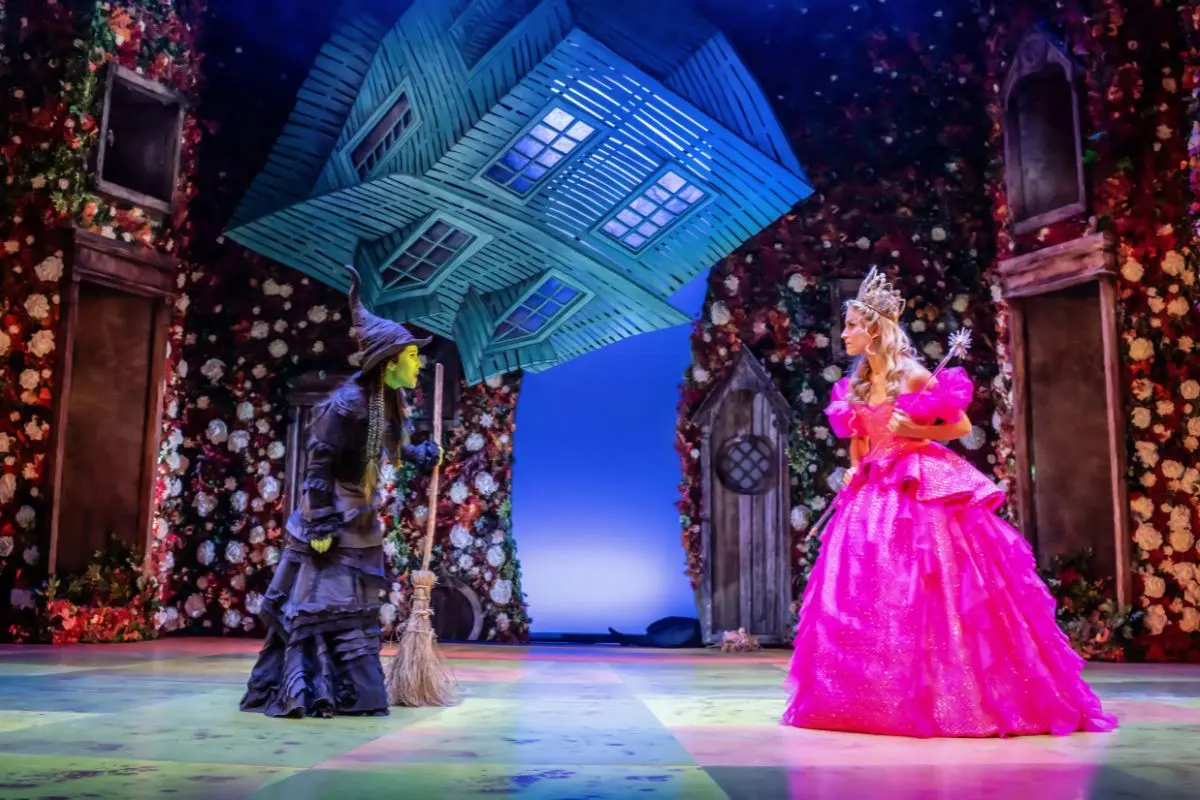
Madrid has learned to market musical theatre as a complete experience: entry, dinner, a photo on Gran Vía, a premium seat, and the feeling that the city has a little Broadway in Spanish. The comparison is not just advertising: the capital has been presented as the third global destination of reference for the musical, behind Broadway and the West End, with 15 productions in the 2025/2026 season and renovated theatres prepared to host increasingly ambitious productions.
The other story isn’t on the marquee, but behind the scenes. While Madrid boasts a cultural industry, theatre tourism and big productions, part of the professionals who sustain those shows continue to demand something less flashy than a marquee: clear labor rules, adequate agreements, and conditions in line with the size the business has reached.
It’s not about saying that all Madrid musicals operate the same or turning a labor claim into an automatic reproach. The topic is interesting precisely because the reality is more complex: the musical in Madrid is no longer a rarity nor a niche bet. It is an industry. And when an industry matures, it must also face uncomfortable questions about salaries, working hours, breaks, rehearsals, leaves, substitutions and musicians in the pit.
Madrid no longer wants to just host musicals: it wants to be a capital of musical theatre
The rise of the genre in Madrid has become one of the city’s major cultural narratives. The current offering does not live solely on a single title or a passing trend. There are major international brands, productions in Spanish, renovated theatres, specialized academies, premium services, and a circuit that attracts both the local public and the tourist who arrives with their ticket already bought.
Growth shows in the language, but also in the numbers handled by the sector itself. APTEM, the Association of Producers and Theatres of Madrid, has placed the number of spectators who attended musicals in the capital in 2023 at four million, within a phenomenon that the association itself presents as cultural and economic in its analysis of the boom in musical theatre in Spain.
The musical is no longer just culture. It is hospitality, transport, employment, tourism, real estate investment, training, and the city’s brand. For that reason, the labor issue is not a minor topic. It is a test of maturity.
The pit does not appear on the poster, but it also sustains the show
The case of musicians is the best summary of the contradiction. The Coordinating Musicians of Musical Theatre explains that it arose “in response to the lack of regulation” in the sector, with the aim of improving the working conditions of these professionals, either through a dedicated agreement of its own or by inclusion in existing theatre agreements with a specific section.
That nuance is important. The claim is not framed as a guild’s tantrum nor as romantic nostalgia for live music. It is a concrete labor demand: if the musical is sold as a living spectacle, with a precise artistic machinery, the musicians who make that promise possible also need a recognizable labor framework.
In 2024, elDiario.es published that the CMTM grouped about 250 professionals and denounced salary stagnation, lack of a specific agreement, use of recorded music and reduction of orchestras. According to the study cited by the outlet, salaries per performance ranged between 40 and 85 euros, with up to nine performances a week and rehearsals paid around 40 euros gross for four hours.
The underlying issue is not only how much a musician earns per performance. It is what kind of industry is being built when the show grows, tickets rise, theatres are renovated and, at the same time, a core part of the machinery laments that there is still no regulation aligned with its reality.
The performers have scales, but that doesn’t exhaust the problem
It is worth not oversimplifying. In the case of actors and actresses, there does exist a specific salary framework in Madrid. The Union of Actors and Actresses notes on its agreements and rates page that the VI Madrid Community Theatre Agreement sets working and salary conditions for actors, and its 2026 tables include categories for musical theatre such as lead, supporting, ensemble/cast, substitute, understudy, booth singer or swing.
Moreover, the 2026 salary tables were approved with an increase of 2.9%, applicable from January 1, 2026, according to the Union of Actors and Actresses when announcing that the new theatre and audiovisual tables had been approved.
That data is key because it avoids broad strokes. There is partial regulation, there are groups better covered than others, and there is an open discussion about whether real conditions match the growth of the business.
A musical is not a text play with added songs. It requires physical endurance, vocal precision, rapid substitutions, double casts, swings capable of covering several characters, and enormous pressure not to fail. The salary table orders part of the landscape, but by itself it does not resolve the conversation about fatigue, injuries, doubles, absences, or availability.
That conversation already came out publicly at the 2024 Musical Theatre Awards, when several professionals used their speeches to denounce fatigue, fear of speaking up, and conditions they considered undignified in a sector that, from the outside, is often seen as a perpetual party.
Vocation cannot replace a proper labor structure
Musical theatre lives with an awkward paradox. Those who work in it typically do so out of vocation, talent, and a discipline that begins many years before the first professional performance. But that same vocation can become a dangerous excuse if the sector uses it to normalize conditions that in another industry would be discussed with more detachment.
The audience does not buy a ticket to contemplate conventions. They go to the theatre to be moved, to hear clearly, to see a clean choreography, and to leave with the sense of having experienced something special. But that magic does not happen by itself. It is made by bodies, voices, hands, backs, schedules, and contracts.
That is why the focus shouldn’t be “Madrid’s musicals exploit their workers.” That phrase would be too broad, too accusatory, and would require a much deeper judicial or labor investigation. The focus is elsewhere: the growth of Madrid’s musical has uncovered a backstage workforce that is still not organized at the same pace as its storefront.
Madrid has the right to boast about its musicals. It has built an offering that attracts audiences, sparks conversation, and has returned theatre to a level of popular centrality it has not always enjoyed. But precisely for that reason, the demand must be greater. A small industry can survive for a while with patches. An industry that wants to be compared with Broadway and the West End needs tougher rules.
The question is no longer whether the musical works, but for whom it works
Madrid’s musical scene has already proven it can fill theatres. It has also shown that it can attract investment, transform venues, cultivate new audiences, and turn certain titles into almost mandatory stops for visitors to the city.
The next test is less glamorous but more important: to prove that this success can sustain dignified professional careers. Not only for recognizable leads, but also for musicians, substitutes, swings, dancers, technicians, and all the profiles that make the performance seem simple when in reality it is a precisely orchestrated operation.
The maturity of a cultural industry is not measured only by its audience figures. It is also measured by how it treats those who do not appear in the promotional photo. Madrid already has the poster, the demand, and the ambition. Now it must look behind the curtain and answer a question that success has made inevitable: if it wants to sell musicals as an international capital, can it afford labor conditions that a portion of the sector still considers insufficient?
Key Points
- Main fact: Madrid has established itself as a major destination for musical theatre, with a wide offering, renovated theatres, and millions of spectators.
- Why it matters: the sector’s growth has made the discussion about agreements, salaries, working hours, breaks and regulation more visible.
- What this piece contributes: not a denunciation for denunciation’s sake; it ties Madrid’s musical’s commercial success to a question of labor maturity.
- What could happen next: the sector will have to demonstrate whether it can professionalize its backstage with the same ambition with which it has built its showcase.