
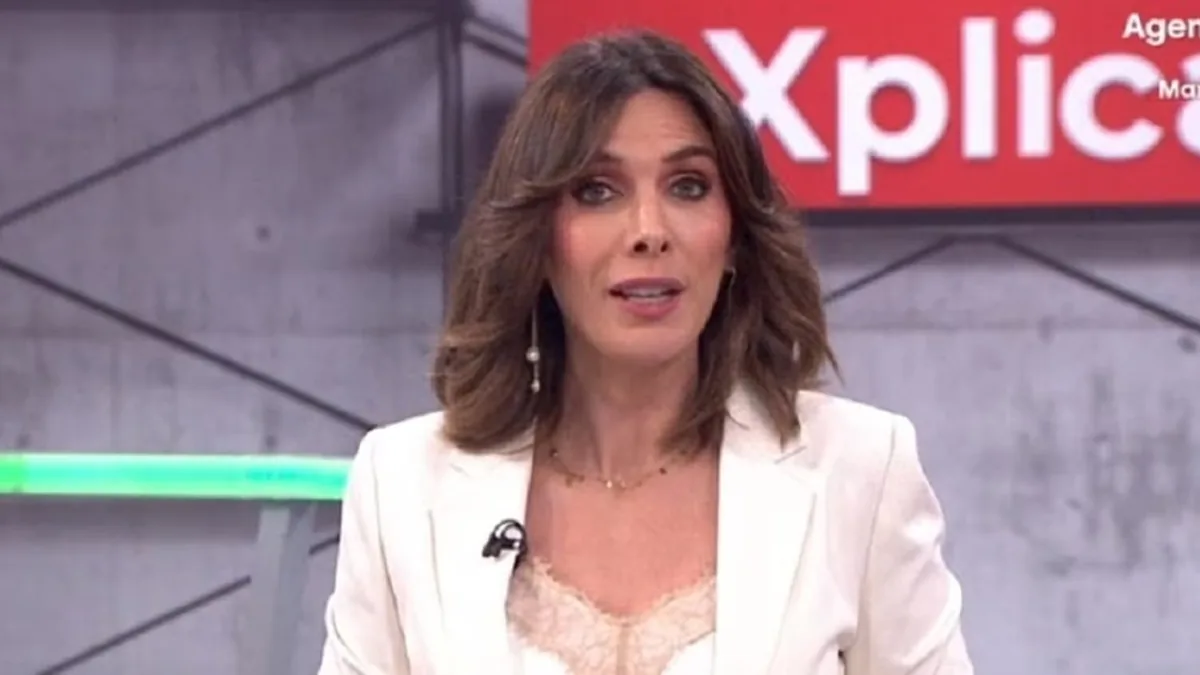
La Séptima will adjust its schedule even before launching. The new digital terrestrial television channel will begin broadcasting next November 5 with Javier Ruiz leading the prime-time slot, while Verónica Sanz will take on the mornings. The change alters the network’s initial plan, which had placed Ruiz in the morning time.
The reorganization is linked to the electoral advance and the special with which La Séptima plans to begin its television journey, devoted to the general elections on November 29. For now, the network has confirmed the distribution of its main faces, but has not detailed the exact times, the definitive program names, nor whether this lineup will remain after the election.
What changes from the original plan
The initial configuration announced placed Javier Ruiz in the mornings. The journalist, who also serves as the channel’s content director and had presented Mañaneros 360, was initially linked to that current-affairs slot.
The new approach shifts him to the night, a modification the network itself has announced through its social channels. Verónica Sanz will occupy the morning slot, although La Séptima has not yet clarified whether she will host a program with its own structure or if this is a provisional designation within the launch lineup.
- Javier Ruiz: leading the prime time.
- Verónica Sanz: in charge of the morning slot.
- November 5: scheduled start date for the broadcasts.
- November 29: first major electoral event planned for the new channel.
The most important difference is not only the time slot. Ruiz leaves the space from which much of the daily current affairs are articulated to become one of the main faces of the night, precisely at the moment the channel will launch with highly attention-grabbing political coverage.
The electoral special shapes the premiere
La Séptima will debut with a special dedicated to the general elections on November 29 and with Javier Ruiz as host. This decision explains why the prime time has become the launch’s axis, though it does not allow assuming that all subsequent programming will be permanently fixed.
Ruiz himself acknowledged that the change forced him to move from the morning to the night. His recent trajectory had been linked to morning current affairs, so the move represents a significant adjustment within the channel’s original design, but not necessarily a complete redefinition of its long-term offering.
The confirmed information allows establishing a clear chronology: initially they planned to place Ruiz in the mornings; after the electoral advance they decided to move him to prime time; and the channel’s launch will be marked by a special on the elections. What remains unresolved is the exact continuity of that scheme after the night election.
What La Séptima has yet to confirm
The new distribution resolves who will occupy each main slot, but leaves several important questions open for viewers. The network has not yet announced the exact broadcast times, the duration of each program, nor its definitive title.
Nor has it been specified whether Ruiz’s jump to the prime time will be a campaign-limited solution or the stable design of La Séptima’s programming. The difference is significant: a launch special can temporarily alter the lineup, whereas a fixed night-time slot would require a different production and content strategy.
The arrival of Verónica Sanz in the mornings also needs more details. Her placement in that slot is confirmed, but the format, the team that will accompany her, and the weight of political information, social issues, or interviews in her lineup are not yet known.
The debate proposal, awaiting development
In addition to the electoral special, La Séptima has proposed organizing open debates with candidates from the main parties with national parliamentary representation. The network has stated that it intends to offer the signal free of charge and without restrictions to television stations, radios, and digital outlets that wish to broadcast them.
This idea is linked to election coverage, but does not yet amount to a closed debates calendar. For the proposal to become an effective part of the programming, the participants, dates, format, and broadcast conditions will have to be specified.
The announced model would allow a single meeting to reach multiple media without being limited to a single channel. However, its reach will depend on whether the parties agree to participate and on establishing a common organization, two elements that have not yet been detailed.
A launch with the lineup still in motion
The Javier Ruiz case shows to what extent the political context has altered the plans of a channel that has not yet begun broadcasting. La Séptima maintains the launch date of November 5, but arrives at that premiere with a lineup different from the initial plan.
For the audience, the immediate certainty is that Ruiz will be in the prime time and Sanz in the mornings, with an electoral special as the first major broadcast. The missing information — times, titles, duration, and the continuity of the change — will determine whether this is a provisional lineup for the start or the stable structure of the new channel.