
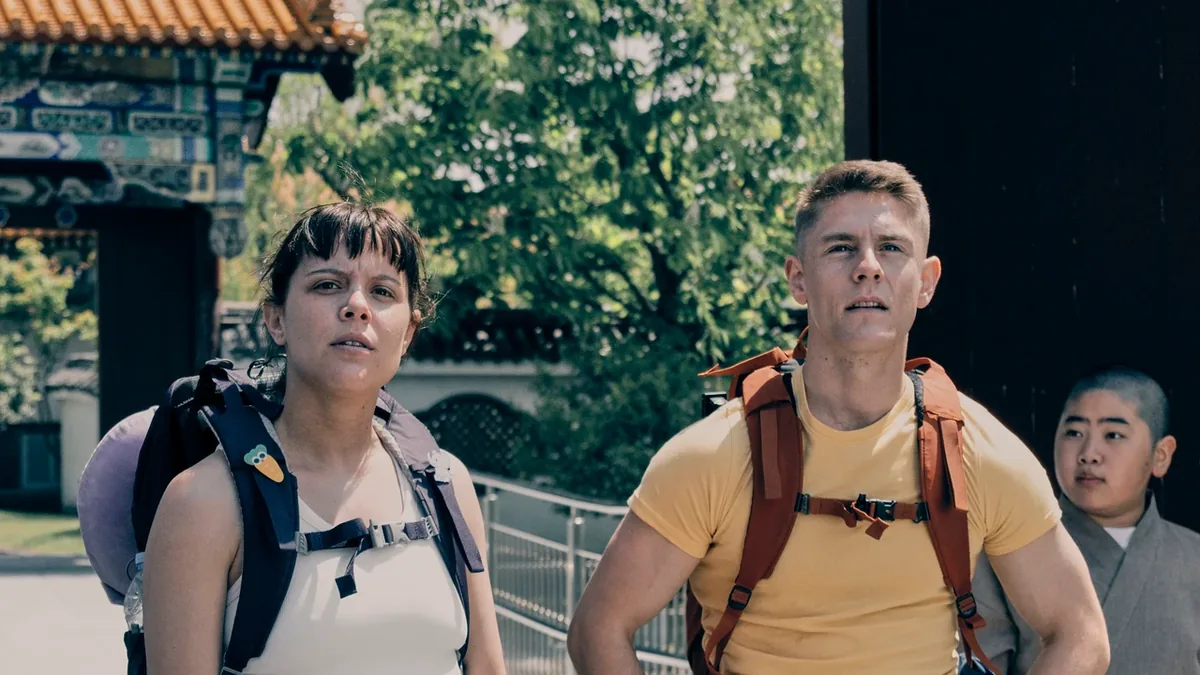
Karateka arrives in Spanish cinemas on October 30, 2026 with a real-life story that is hard to sum up into a simple film about overcoming adversity. Aritz Moreno’s movie follows Sandra Sánchez from her early ties to karate to the Olympic gold she earned at 39, turning that journey into a tale about discipline, time, and resilience in the face of others’ expectations.
Andrea Ros plays the athlete and Patrick Criado brings to life Jesús del Moral, her coach and life partner. The film doesn’t need to exaggerate Sánchez’s path to find epic moments: its principal conflict already centers on a very concrete question, rare in sports cinema, what happens when someone reaches their best version just as the surroundings expect them to retire.
A Champion Against the Sporting Clock
Sandra Sánchez’s biography possesses a peculiarity that sets it apart from many sports narratives. It’s not merely about reaching the top, but about returning to it after having been sidelined by the usual plans of the system, and doing so at an age when aging is often deemed a definitive disadvantage.
This nuance shifts the center of Karateka. The film does not present maturity as an obstacle the protagonist must hide, but as the ground from which she builds her performance. Each training session thus carries a double meaning: it serves to prepare for a competition, but also to defend the legitimacy of continuing to compete.
The story unfolds in a sport that demands immense technical precision, where accuracy and control weigh as much as power. The film uses that dimension to explain that experience does not equal acceptance of mediocrity. For Sánchez, knowing her own body, accepting its limits, and repeating movements until they become instinctive are all part of the same strategy.
Karate as a Dramatic Language
One of the film’s greatest strengths lies in not treating karate as mere decoration for the competition scenes. The mat, the rituals, and the pre-comp ritual focus function as narrative elements: they reveal a world built on observation, restraint, and the ability to wait for the exact moment.
For audiences unfamiliar with this discipline, Karateka offers an accessible entry point. It doesn’t turn the sport into a permanently technical explanation, but it does make understandable why a small variation in stance or tempo can change the outcome of a performance.
The choice also allows the conflict to be expressed without relying on grand speeches. The tension doesn’t always depend on verbal rivalry or a prolonged physical confrontation. Often it lies in preparation, in repetition, and in the duty to stay calm when everything invites rushing.
Andrea Ros and Patrick Criado Sustain the Intimacy
The bond between Sandra and Jesús prevents the film from being reduced to a sequence of trainings and medals. Their relationship introduces a quotidian dimension: behind the competing athlete lies the person living with pressure, doubts, and shared sacrifice.
Andrea Ros portrays Sandra with a blend of firmness and vulnerability. Her performance is particularly important because the film cannot rely solely on the spectacle of results: it needs the audience to understand the emotional cost of continuing when the path grows tighter.
Patrick Criado provides Jesús del Moral with a complementary presence. He does not appear merely as the figure guiding the champion, but as someone integrated into a life project that demands trust, patience, and the ability to sustain each other. The chemistry between them lends weight to the moments when competition gives way to everyday life.
A Recognizable Structure That Doesn’t Always Keep the Same Pace
Karateka works with familiar conventions of sports drama: the initial promise, the departure, the return, the sacrifices, and the possibility of reaching a goal that once seemed reserved for others. That structure helps connect with the audience, even if it limits some of the surprise.
The issue arises when the film speeds up certain periods of Sandra’s life and dwells longer on others. The result is uneven pacing, with transitions that can leave the impression that some conflicts are introduced before the story has had time to develop them.
Not all supporting elements receive the same arc. Jesús’s past and some tensions within the sports environment are suggested more forcefully than they subsequently receive in the narration. They are minor fissures, but they reveal that the film aims to cover a broad arc without always pausing to consider the consequences of each episode.
The True Victory Lies Before the Podium
The competitive climax carries obvious weight because the audience understands the historical significance of the achievement. However, Karateka’s appeal does not depend solely on winning Olympic gold. Its strongest reading comes earlier, in the decision to return to training and in the daily construction of a career that does not fit the calendar others had deemed acceptable.
This approach makes the film work even for those who do not follow karate. The competition provides the visible objective, but the recognizable conflict is elsewhere: what to do when an institution, an age, or a first defeat seems to define how far a person can go.
Aritz Moreno’s film does not reinvent sports drama nor does it pretend to. Its wager is more concrete: to use an exceptional story to talk about maturity as a stage of performance, not as the epilogue of a career. When it stays on that course, Karateka finds its own energy and turns every gesture of discipline into a form of resilience.
That is why its best strike is not necessarily in the final medal, but in the idea that precedes it: Sandra Sánchez did not competed against time to prove that age did not matter, but to prove that it could also be part of her advantage. That is the perspective that gives meaning to the film and remains when the tatami stops occupying the screen.