
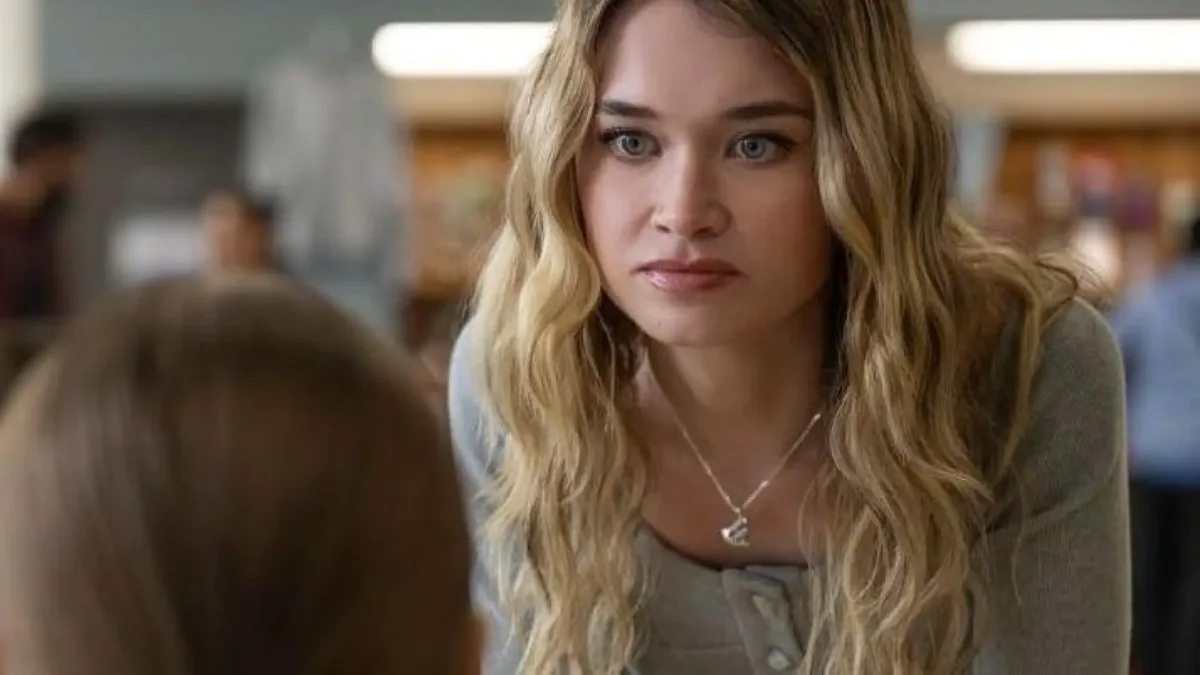
Carrie returns to begin anew with a teenage girl who is humiliated by her peers, an overbearing mother, and a power that grows alongside her anger. But Mike Flanagan’s series, which Prime Video releases in Spain on October 7, introduces a difference that alters the mechanics of the narrative: the bullying no longer ends when Carrie White crosses the school door.
The update could have stopped at placing mobile phones in the hands of characters conceived in the seventies. Yet Prime Video’s official synopsis places a viral scandal and the everyday cruelty of social media at the center of the story. There lies the most interesting shift: Stephen King’s classic horror is adapted to a adolescence in which the public sphere accompanies the victim all the way home.
The Mobile Phone Changes a Basic Rule of ‘Carrie’
In the 1974 novel and in its earlier adaptations, the high school functions as one of the main realms of threat, while Margaret White’s home offers another form of violence. The new version links both spaces. According to Prime Video’s official listing, Carrie must confront a case of harassment that goes viral in her community and the constant pressure of the social-media era.
That modifies something deeper than mere setting. A video, an anonymous account, or a humiliation shared online eliminates the old boundary between the schoolyard and the protagonist’s bedroom. The house can still be a confinement, but it is no longer a disconnection. For a story built on isolation, shame, and the gaze of others, that difference is exceptionally fertile.
The series comprises eight episodes and stars Summer H. Howell as Carrie and Samantha Sloyan as Margaret White, with Matthew Lillard, Siena Agudong, Amber Midthunder and Alison Thornton in the cast. ActualTV had already noted how Stephen King had reacted positively to the early look at this adaptation; now, with the premiere near, the useful question isn’t whether Flanagan respects every step of the original, but what he manages to do differently with it.
Flanagan Has Eight Episodes to Expand the Tragedy
The jump from film to series also redefines the scale. Cinematic adaptations have had to compress Carrie’s fall into roughly two hours. Eight episodes allow for more room to explore classmates, teachers, Margaret, and the social construction of humiliation itself.
That extra space can be a strength or a weakness. Carrie works precisely because it moves toward a finale that feels inevitable. Extending detours too much might dilute that pressure. Flanagan’s chance is to use the additional time to show how a collective victim is fashioned without turning a sharp, single-verse tragedy into a string of subplots.
The official trailer released by Prime Video Spain makes clear the series keeps the recognizable icons of the story, but the interest lies in what happens between them: who watches, who records, who shares, and what happens when a humiliation ceases to belong to the place where it occurred.
The Best Update Doesn’t Need to Change the Monster
There is a common temptation when updating classics: to explain that the world has changed by adding visible technology. Carrie offers a more powerful possibility. Networks don’t need to become the villain; it suffices that they amplify the mechanism King had already written—the ability of a group to turn someone’s difference into spectacle.
Thus the 2026 adaptation might find its own reason to exist. The telekinesis remains extraordinary; what is truly contemporary is that the persecution can be permanent. If Flanagan can carry that idea through all eight episodes without substituting human tragedy for a lesson about the internet, this Carrie will have achieved something more valuable than merely updating a classic: it will have found the modern equivalent of its claustrophobia.