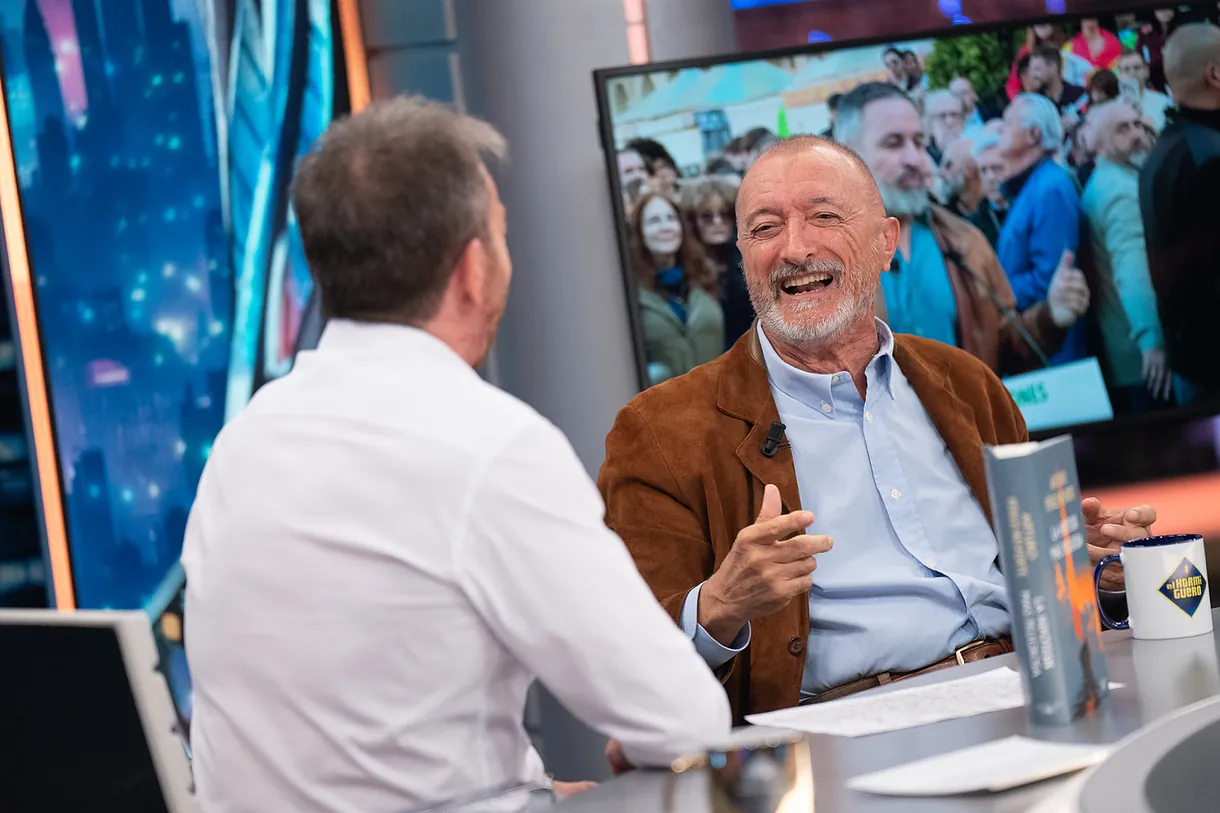
Arturo Pérez-Reverte appeared on ‘El Hormiguero’ on Wednesday, November 18 to present ‘The Most Dangerous Hypothesis’, but a question from Pablo Motos about the general elections of November 29 steered the conversation toward Spanish politics. The writer did not point to a possible winner nor did he dwell on a distribution of seats. His warning was of another kind: “The worst thing is the lack of hope.”
The line came when the host asked him what could be the most dangerous hypothesis for Spain after 29-N. Pérez-Reverte replied that, in his view, the loss of confidence in political representatives has ended up undermining citizens’ expectations. “We no longer believe in solutions, we look for the least bad hypothesis.” he stated, according to a fragment of the interview published by Antena 3.
The reflection shifted the focus to something other than electoral competition: what happens when voters stop expecting positive changes and start evaluating alternatives solely by the problems they believe they can avoid.
Pérez-Reverte’s “Least Bad Hypothesis” Ahead of 29-N
The novelist linked that disillusionment to the years of accumulated disappointments. In his remarks he argued that leaders from different parties have repeatedly betrayed the public, although he also hinted at a particular critique of someone who, in his view, has lied more recently. This is his personal assessment of the political landscape, not a conclusion drawn from a poll.
The most striking aspect of his words was the shift in perspective. Instead of talking about electoral programs or concrete candidates, Pérez-Reverte described a scenario in which trust in politics is no longer taken for granted. For him, the most worrying consequence would not necessarily be a specific electoral outcome, but the disappearance of the expectation that things can improve.
The choice of the phrase “least bad hypothesis” was not accidental within the conversation either. The writer was visiting the program to discuss his new work, ‘The Most Dangerous Hypothesis’, and Motos seized on that title to pose the question about Spain’s near-term political future.
A Literary Interview That Ended Up Talking About Confidence in Politics
Pérez-Reverte’s visit began linked to literature, but it broadened to various current issues. The full interview aired by Antena 3 shows that the writer also spoke about specific leaders and parties, although his answer about 29-N raised a broader question than affinity or opposition toward a given party.
In an electoral campaign, parties typically present their proposals as an opportunity for change. Pérez-Reverte described, instead, citizens who, in his view, no longer fully believe in those promises. The difference between voting for hope and voting out of necessity was the core of his intervention.
That does not mean that all Spaniards share that sentiment, nor does it allow predicting how they will behave at the polls. His words express the writer’s interpretation of the political climate, not a measurement of the electorate’s mood.
The reflection arrived during one of the week’s visits to ‘El Hormiguero’ and left an open question a few days before the vote: how much weight does hope carry in an electoral decision when confidence in the parties has weakened?