
The latest film in The Hunger Games franchise does not seek to uncover what happened to Katniss Everdeen after her uprising. The Ballad of Songbirds and Snakes, released on November 20, goes back to the youth of Haymitch Abernathy, a character whose adult life viewers already know. His story takes place twenty-four years before the start of the saga.
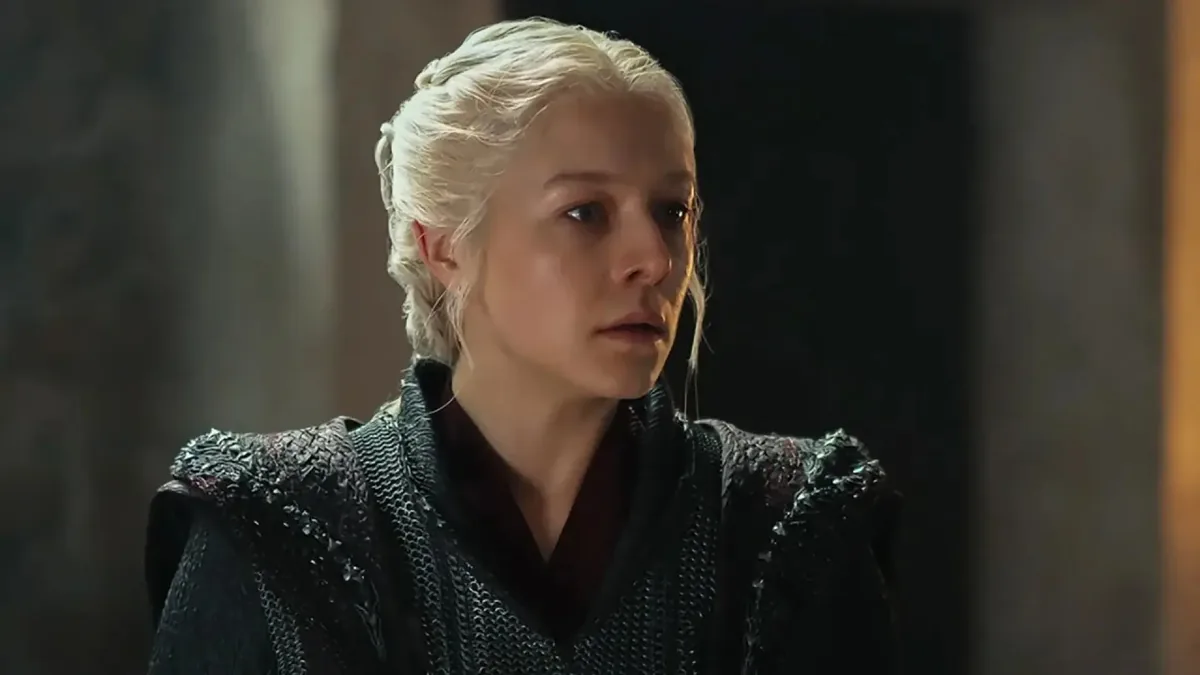
It is the second time Lionsgate steps back in the Panem chronology. HBO has applied a strategy akin to House of the Dragon, by bringing the Targaryen dynasty to a time well before Game of Thrones. In both cases, the prequel allows preserving the fictional world without having to artificially extend the conclusions of its protagonists.
But it is not a guaranteed formula. The box office performance of two recent prequels—the first in the Panem saga and Furiosa—helps distinguish the potential of this narrative mechanism from its commercial results. The past offers studios a brand that audiences already know, but it does not guarantee that they will return to buy a ticket.
A Way to Keep a Saga Alive After Its Ending
When Mockingjay Part 2 concluded in 2015, the central conflict of Katniss’s story was resolved. Continuing it would have required introducing a new problem and probably reassembling a cast tied to a closed chapter. The prequel preserves the districts, the Capitol, and the Games that give the saga its name, without that obligation.
In this case, too, the material does not arise solely from a cinematic decision. Lionsgate announced the adaptation of Suzanne Collins’s next novel in June 2024, months before its release in bookstores in March 2025. That link between publishing and cinema allows drawing audiences from both media around the same narrative event.
The temporal distance also provides room to refresh the cast. Joseph Zada portrays the teenage Haymitch, while Woody Harrelson brought his adult version to life. The audience has a known outcome, but does not know the events that shaped the character.
Box Office Proves a Prequel Is Not a Sure Bet
We compared worldwide grosses and estimated budgets for two recent film prequels with those of the immediately preceding film in each franchise, using The Numbers. The figures are rounded to the nearest million dollars in nominal terms and do not reflect the studios’ net income.
| Franchise | Previous Installment: Box Office / Budget | Prequel: Box Office / Budget |
|---|---|---|
| The Hunger Games | Sinsajo: Part 2 (2015): 646 / 160 | The Ballad of Songbirds and Snakes (2023): 348 / 100 |
| Mad Max | Fury Road (2015): 380 / 150 | Furiosa (2024): 174 / 168 |
The first Panem prequel recovered about 54% of the previous film’s worldwide take, but its estimated budget was 37.5% lower. In Furiosa, costs went the other way. The gross dropped to roughly 46% of Fury Road’s, while the estimated budget rose by about 12%, according to the same database.
The results are two illustrative cases, not a representative sample of all prequels. They do not permit drawing conclusions about each film’s benefits: promotional expenses, the share of box office between exhibitors and distributors, and post-theater revenues are missing. They do, however, illustrate two very different ways of bearing the risk when reviving a saga.
Television Uses the Past in a Different Way
With House of the Dragon, HBO chose to jump about two centuries before Game of Thrones, drawing on Fire & Blood by George R. R. Martin. The world of Westeros remained, but the cast and the conflicts began anew. HBO announced that its August 2022 premiere drew around ten million viewers in the United States across linear broadcasting and HBO Max.
That figure cannot be directly compared with a film’s global box office, but it does illustrate the initial pull of a story set earlier than its predecessor. A platform can use new seasons to maintain subscriptions, rekindle catalog consumption, and alternate projects set in different eras of the same universe. The Westeros schedule, which includes a fourth season of House of the Dragon, makes that continuity strategy visible.
A Known Story Is Not the Same as a Story That Has Run Its Course
A good prequel changes the meaning of events the audience already knows. In Panem, recounting the backstory of President Snow or Haymitch permits exploring different relationships with the political system of the original films; in Westeros, the decline of a dynasty gains new significance once its history is understood.
The problem arises when the connections to the previous work are the sole reason to tell the tale. Promotion can sell brand recognition; a film must sustain dramatic interest on its own merits. The Ballad of Songbirds and Snakes provides a new test of that difference. There is not yet a complete balance of its opening weekend, so it would be premature to ascribe a definitive outcome.
Prequels are especially useful when the main story has concluded, but their world still harbors conflicts, characters, and eras with enough dramatic weight. Hollywood’s real resource to leverage is not merely the past, but the portion of its franchises that still has a story worth telling.