The return of Harry Potter to Hogwarts won’t be decided solely by the actor portraying the young wizard or by the castle’s appearance. HBO is assembling a cast that makes room for a part of the school that Warner Bros. films left on the margins: the secondary teachers, the house ghosts, the talking portraits, and the characters who fill the corridors even when Harry isn’t saving the world.
The signings announced at the end of October, with actors for Nearly Headless Nick, the Bloody Baron, the Fat Friar, the Fat Lady, and the Sorting Hat, complete a thread that had been taking shape for months. The series will also feature Peeves the poltergeist and Cuthbert Binns, the History of Magic professor, two absences especially significant from the cinema. They are confirmed additions by HBO, not readers’ wishes.
There is a difference between extending a known film with more minutes and rebuilding the sense that Hogwarts is a living school, with rules, routines, and its own history. The opportunity for the series lies in turning the setting into something more than the stage where Harry’s adventures unfold. That is what its cast suggests, though it remains to be seen how much weight each character will carry.
The ghosts and portraits reclaim their names
HBO has chosen Leo Bill as Nearly Headless Nick, the Gryffindor ghost; Andrew Brooke as the Bloody Baron, associated with Slytherin; and Daniel Fearn as the Fat Friar, of Hufflepuff. Laura Smyth will portray the Fat Lady, the portrait that guards access to Gryffindor’s common room, and David Threlfall will voice the Sorting Hat.
In the films there were already ghosts, talking portraits, and school ceremonies. It would be inaccurate to present them as entirely novel elements. What changed was their importance. The need to advance the plot concentrated many scenes on the main trio and the adults decisive for each adventure. Some inhabitants of the school became fleeting apparitions; others disappeared.
In the books, these figures do more than decorate a fantasy world. The ghosts have ties to the houses and to the school’s past. The portraits turn a door into a scene of coexistence. The Sorting Hat introduces the identities and rivalries that organize student life. Giving them concrete actors does not guarantee more minutes, but it indicates that the production wanted to individualize them from the start.
Peeves and Binns, two recoveries that explain what cinema lost
The most well-known absence is Peeves. The character appears repeatedly in the novels as a force of mischief that irritates teachers and students, especially the janitor Argus Filch. The first film even shot scenes with Rik Mayall, but they were cut. The new version has recruited Peter Serafinowicz, according to the official Harry Potter website.
The importance of Peeves does not lie in unlocking a major plot reveal. Precisely for that reason, it becomes interesting. His presence allows showing the everyday conflicts of a school that is not reduced to the next clue about Voldemort. It’s an example of how a character dispensable to plot advancement can be essential to the tone.
Something similar happens with Cuthbert Binns, played by Richard Durden. He is a professor who continues teaching History of Magic after death, a quirk that condenses the humor of the novels. The franchise’s official website stresses that this will be his first on-screen appearance. His subject raises another narrative question: how much time will the series devote to Harry truly being a student and not just a protagonist running from danger to danger.
The cast expands that school life with Rolanda Hooch (Louise Brealey), Pomona Sprout (Sirine Saba) and Poppy Pomfrey (Bríd Brennan). They are not new characters to the saga, but together they allow imagining classes, care, and activities outside the big confrontations. It is useful to separate what is confirmed from what is hypothetical: HBO has announced their actors, not a detailed list of scenes or the duration of their appearances.
The supporting cast also connects stories the cinema condensed
The first season also brings Harry Gilby as Charlie Weasley, Jasper Talbot as James Potter, and Hannah Chinn as Lily Potter aboard. HBO confirmed these three signings on October 27. Harry’s parents did appear in the films, while Charlie’s involvement, related to dragons as Ron’s brother, was largely outside the cinematic action.
ActualTV had already explained the relevance of Charlie and Harry’s parents. Seeing them now alongside professors, ghosts, and portraits opens up a broader question: if the series aims to show how a community operates, rather than merely extending famous scenes. The Weasley family and students from other houses do not just accompany the protagonists: they make Hogwarts seem like a place with relationships that continue beyond the central adventure.
Eight episodes do not guarantee a better adaptation
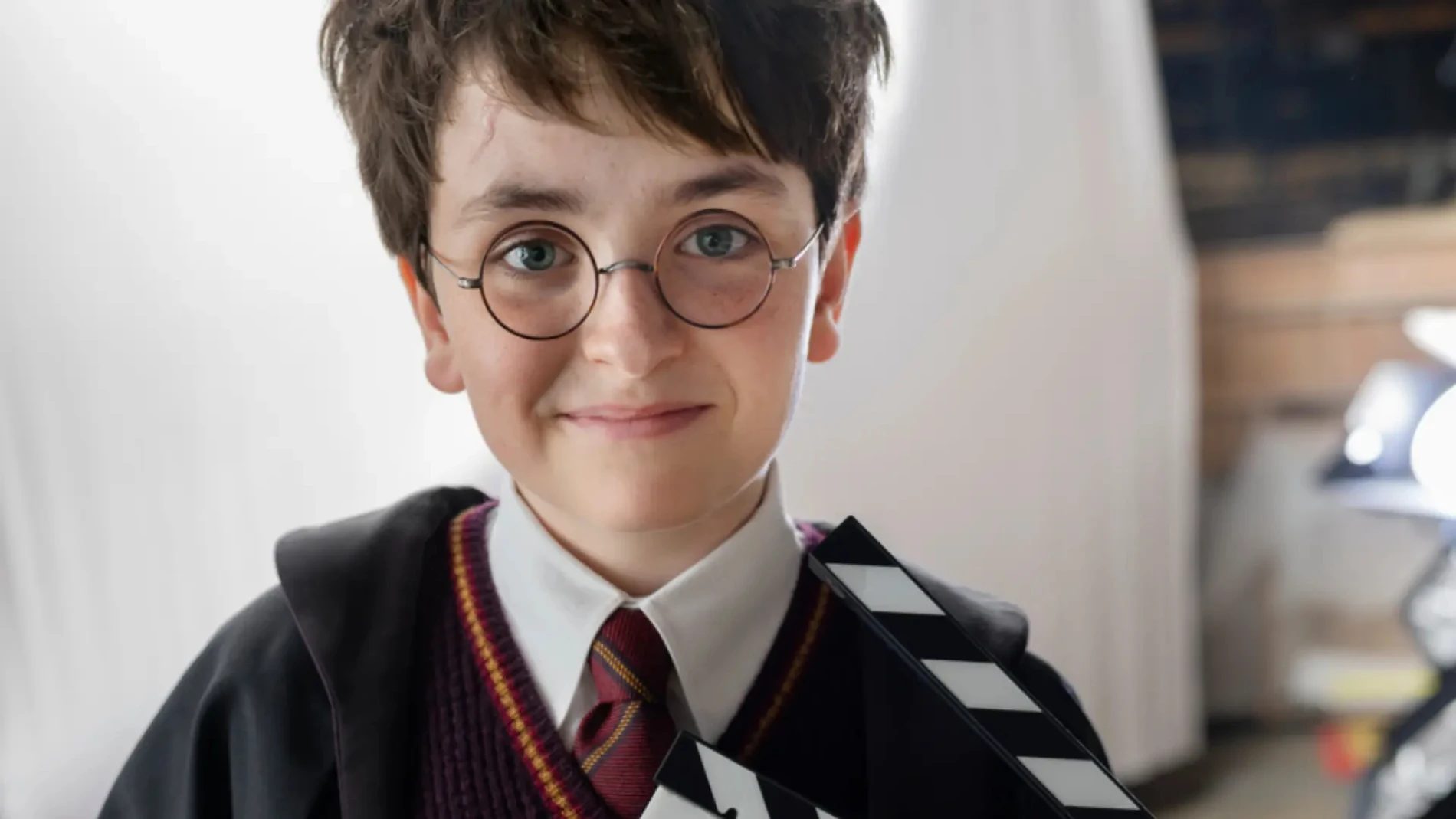
Harry Potter and the Philosopher’s Stone will arrive on HBO Max on December 25, 2026 with eight episodes. Dominic McLaughlin will portray Harry; Arabella Stanton, Hermione; and Alastair Stout, Ron. Francesca Gardiner is heading the scripts and executive production, and Mark Mylod will direct several episodes. HBO has already announced work and casting for a second season.
The comparison with the 2001 film seems unavoidable, but the amount of time available is not an automatic measure of fidelity or quality. A character can be present and contribute little; an added scene can enrich the narrative or slow it down. The examination of this adaptation will not be about counting how many figures from the novels appear as if filling a sticker album.
Its challenge is to reclaim what cinema had to trim without losing the narrative clarity that turned those films into a global phenomenon. If HBO manages to give the ghosts, teachers, and secondary students a recognizable function, it will have found a dramatic reason to return to Hogwarts. The series still has to prove it; for now, the cast has defined what kind of school it wants to build.