Under the Surface has become one of Netflix’s biggest surprises. The horror miniseries, released on October 8, reached the number one spot in Spain and in about 80 other countries just three days after arriving on the platform, according to FlixPatrol’s international tracking data.
The success comes with a very specific proposition: six episodes, about four hours total, and a self-contained story about a marine creature that threatens a Newfoundland fishing community. It isn’t a production designed to demand several seasons from viewers, but a brief marathon that concentrates mystery and horror within a single conflict.
A Remote Town and Something Moving Beneath the Water
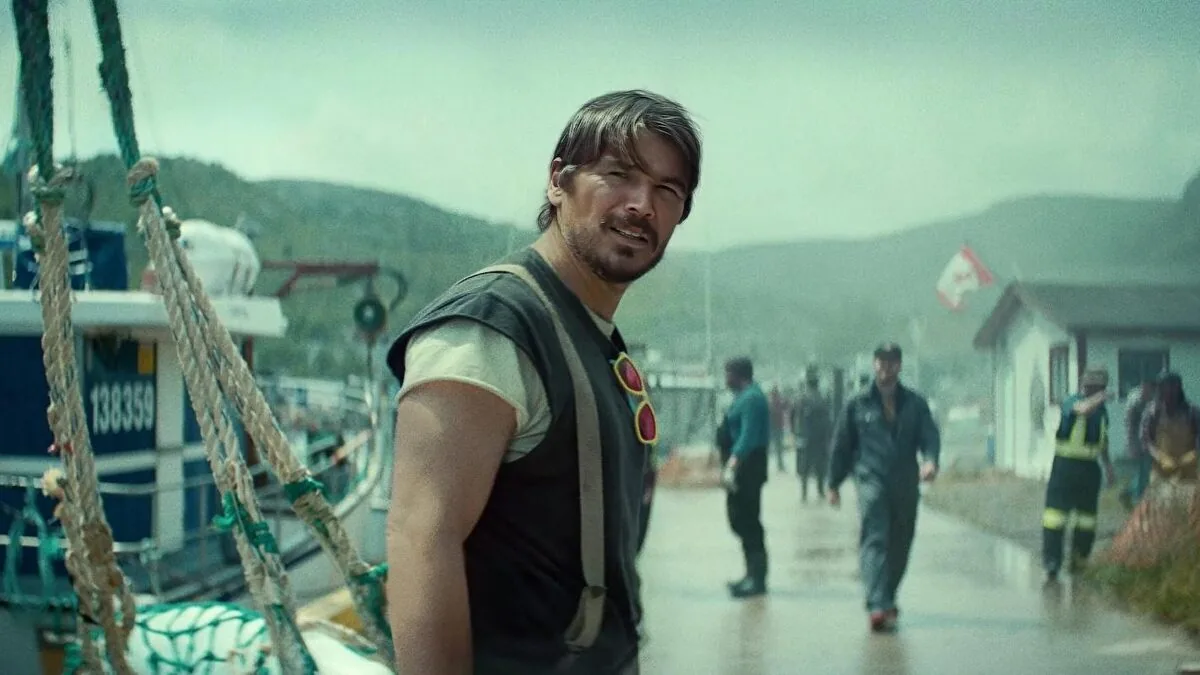
The plot unfolds in Snook’s Arm, a coastal locality that plunges into chaos when an unknown threat appears in its waters. At the center of the tale is Calvin, a veteran fisherman played by Josh Hartnett, compelled to face the danger to protect his family and the rest of the community.
Joining Hartnett, the cast includes Mackenzie Davis as Dr. Fonda, along with Natasha Henstridge, Charlie Heaton, and Ruby Stokes. The series is created by Jesse McKeown and features Jamie Childs among its directors.
The premise may sound familiar on paper, but the setting makes a meaningful difference. Newfoundland doesn’t merely serve as a backdrop: its shores, the fog, the isolation, and the reliance on the sea turn the landscape into an active part of the threat.
The Monster Matters Less Than What Viewers Imagine
One of the most effective decisions in Under the Surface is not to turn the creature into a permanent, perfectly visible presence. The series leans into off-screen moments, sounds, ambiguous signals, and the reactions of people who live beside the water.
That approach shifts much of the horror toward the imagination. Rather than showing too early what lurks beneath the surface, the fiction builds unease around a simple question: what could be stalking a community that knows the sea better than anyone?
The result connects with a tradition of maritime horror where the environment is as important as the creature. The brine, the dark waters, and the sense of being trapped in a remote location contribute to an atmosphere close to cosmic dread, without relying solely on jump scares.
Why the Six-Episode Format Plays to Its Strength
The show’s performance also helps explain the current moment in streaming. A six-episode miniseries offers the audience a very clear promise: a manageable story, a planned ending, and no obligation to commit to multiple seasons.
In the case of Under the Surface, that duration fits especially well with this kind of tale. The mystery can progress quickly, the conflict doesn’t need to branch into numerous secondary arcs, and the viewer has a concrete sense of how much time they must invest to reach the finale.
That alone doesn’t guarantee a production will work. The formula requires a consistent atmosphere and a rhythm capable of sustaining the intrigue. But it does remove one of the common barriers of platform viewing: starting a series that might go unfinished or drag on longer than necessary.
Josh Hartnett’s Return Is Also Part of the Phenomenon
Hartnett’s presence adds another appeal to the fiction. The actor joins the series after regaining visibility with projects such as ‘Oppenheimer’, an episode of ‘Black Mirror’, and ‘Old’, the film directed by M. Night Shyamalan.
His casting aligns with the tone of the story. Hartnett plays a character defined by family responsibility and the pressure to act when a threat threatens an entire town. He isn’t a conventional action hero, but a figure of authority within a community that begins to lose control.
Moreover, the Halloween-season release boosts the show’s visibility. Netflix has positioned an atmospheric horror story in a period when audiences are more frequently seeking monster movies, suspense, and supernatural phenomena.
An International No. 1, but with a Prudent Reading
FlixPatrol’s data places Under the Surface at the top of its popularity rankings in 81 countries, including Spain, shortly after its debut. It’s a clear sign of international interest, though it’s wise to distinguish this kind of tracking from Netflix’s official audience figures.
Platforms don’t always publish the exact number of viewers or hours watched for each release. Therefore, topping a popularity chart can indicate the reach of the phenomenon, but it does not by itself reveal the total viewing volume or how much time each user spent on the series.
Critical response has also been positive, though not unanimous: the production holds 82% favorable ratings on Rotten Tomatoes and a score of 70 out of 100 on Metacritic. These figures point to a solid reception, especially for a work that leans more toward tension and atmosphere than constant spectacle.
A Clear Choice for Those Seeking Terrror Without a Long-Term Commitment
For viewers in Spain, the main advantage of Under the Surface is straightforward: the six episodes are already available on Netflix and can be watched in a single afternoon marathon or spread across several nights. Its compact duration places it between a long movie and a traditional season-length series.
The offering may especially appeal to those who enjoy atmospheric horror, mysteries of isolated communities, and stories in which the monster remains partially hidden. Those hoping for a succession of jump scares or a creature shown constantly may find a series more interested in building unease than in delivering immediate answers.
The success of Under the Surface demonstrates, for now at least, that a horror production doesn’t need to build a full franchise to attract attention. In a catalog dominated by long-running series, its four hours of screen time and its commitment to conclude the story may be precisely the element that makes it such an easy-to-recommend phenomenon.