
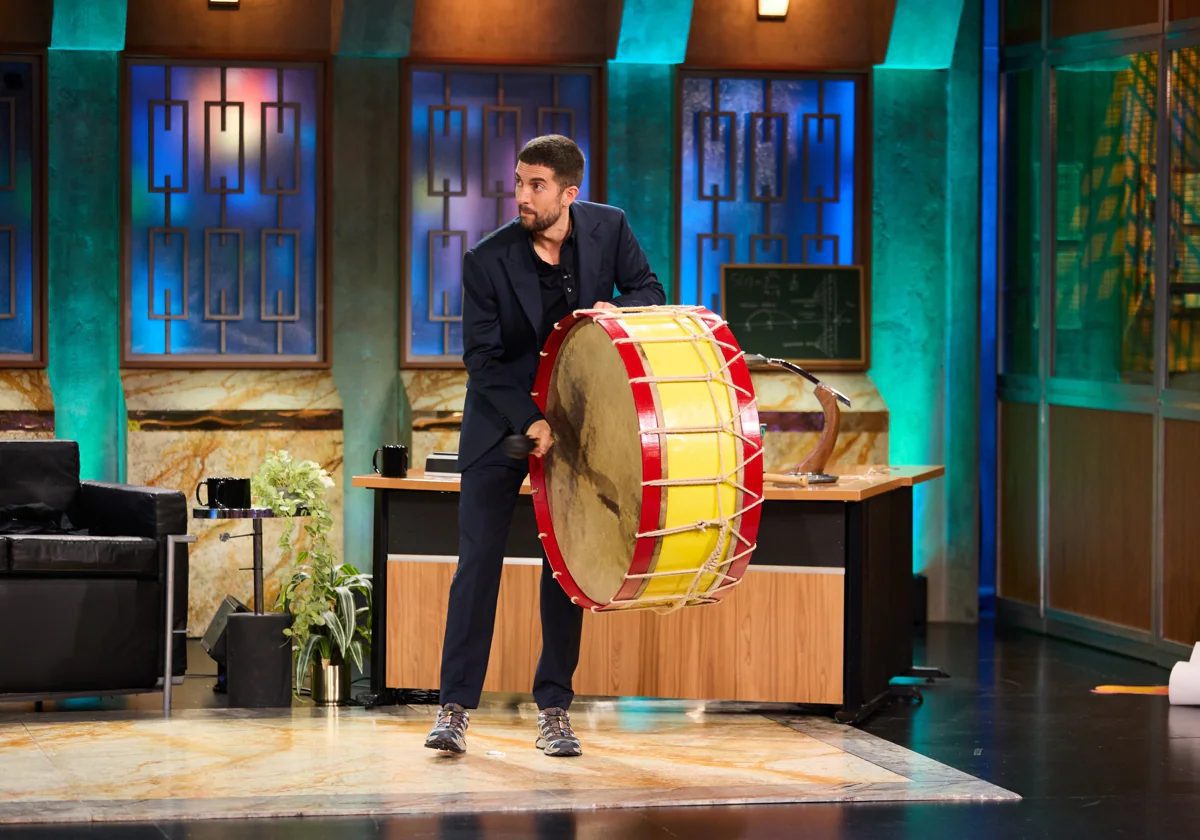
David Broncano has invited representatives from PSOE, PP, Vox and Frente Amplio to participate in La Revuelta ahead of the Spanish general elections on November 29, 2026, and the program on La 1 has already received two affirmative responses. The host spoke about these invitations on the broadcast of October 15, without publicly confirming which candidates have accepted or announcing the interview dates yet.
The initiative raises a rather peculiar question for RTVE’s entertainment programming. One thing is to interview an actor promoting a film, and another is to host a candidate who is asking for votes; even if the table, the stage, and the jokes are the same, the context changes completely.
Which Candidates Has Broncano Invited, and Which Have Accepted
The invitations were extended to Pedro Sánchez, Alberto Núñez Feijóo, Santiago Abascal and a representative of Frente Amplio. According to AS in its information from October 16, Broncano indicated that two of the four had said yes and humorously hinted at who they might be. But hints are not confirmations: at present there is no official attendee list with names and fixed dates.
This nuance matters because broadcasting an interview, not merely issuing an invitation, is what will allow judging how each intervention fits into the public network’s schedule. Nor can one deduce from two responses that the other two formations have definitively declined to attend: agendas and negotiations can change.
The show arrives at the electoral process with a very defined personality. La Revuelta operates through conversations that wander, unconventional questions, audience participation, and humor that does not always seek a definitive answer. That formula has worked with guests of very different profiles, but it poses an obvious challenge when the interviewee aspires to govern.
The Difficult Balance Between Electoral Interview and Entertainment
Broncano can leverage something that a traditional electoral debate finds more challenging: asking unexpected questions and eliciting less rehearsed answers. The risk, however, is that the comedic tone turns a candidate’s passage into a sequence of viral moments, leaving little room for informative questions. The political interview in an entertainment format makes sense if the personality of the format provides something the viewer has not already seen in a debate.
There is also a practical problem. Not all guests fit in the same way in a show where improvisation, the audience, and the rapport with the collaborators matter. The gap between two candidates may appear in their answers, but also in how much time they receive, which questions are asked, whether they participate in the same sections, or if one is favored more by editing.
Moreover, the network does not operate under the same conditions as a private channel. Instruction 4/2011 from the Central Electoral Board, interpreting Article 66 of the LOREG, requires public media to guarantee the principles of pluralism, equality, proportionality, and informational neutrality in their programming during the electoral period. Compliance with these obligations is assessed across the overall coverage and the specific conditions; it is not automatically resolved by sending four invitations.
When Does the Campaign Start and What Is Yet to be Announced
The general elections will be held on Sunday, November 29, and the official campaign will begin on November 13 and end on November 27. Electoral regulations and RTVE’s informational plans are part of the context that any broadcast featuring aspiring public officeholders must take into account. As of this reporting, the program has not yet announced a schedule of visits for those political representatives.
The novelty also arrives at a different stage for La Revuelta, now housed at the Albéniz Theatre after leaving its previous venue. The show preserves the traits that made it recognizable, but it has become a stable fixture on La 1’s lineup and one of its spaces with the greatest capacity to generate conversation beyond the broadcast.
That televisual weight amplifies both opportunity and responsibility. In a conventional studio, a political interview can be announced and analyzed as part of electoral coverage. In La Revuelta, any joke can circulate out of context on social networks, cut into a seconds-long clip, and reach audiences who have not seen the rest of the conversation.
The accumulated experience in the access prime-time category explains why this bet is so interesting to RTVE: the format attracts viewers who might not voluntarily seek a classic electoral interview. Precisely for that reason it deserves analysis distinct from what a Telediario news block would receive.
The confirmed fact today is concrete: four invitations, two affirmative responses, and no officially closed attendee name. The next step will be for La Revuelta to announce who will attend, on what dates, and in what format. Then it will be possible to assess whether Broncano manages to discuss politics without turning his program into a conventional debate and without depriving the interviews of substance.